Skip to header Skip to main navigation Skip to main content Skip to footer

Search form

Home
Eagle Nest New Mexico
Where the Mountains Meet the Lake

Main navigation

  • Home
  • Dining
  • Lodging
  • Shopping
  • Things to Do
  • Outdoors
  • History
  • Webcams
  • Business Directory

Eagle Nest History

The Eagles on the Concrete: How Eagle Nest Dam Got Its Name
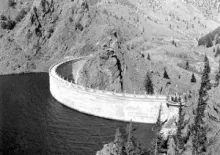
A black-and-white photograph from 1922 showing the curved concrete arch of Eagle Nest Dam spanning the Cimarron River in Cimarron Canyon.

Drive east from the village on U.S. Route 64 and the road leaves Eagle Nest Lake behind and enters Cimarron Canyon, where a pale concrete arch still spans the Cimarron River between granite walls. That arch is Eagle Nest Dam, the structure that created the lake, and its name carries a story that visitors hear to this day: eagles made themselves at home on the sides of the new dam, and the dam took its name from its first wild tenants.
  • Read more about The Eagles on the Concrete: How Eagle Nest Dam Got Its Name

Living History on the Lake: A Dam Centennial and a Fish Fest That Endures

Eagle Nest Lake spread across the Moreno Valley below Baldy Mountain on a summer day.

Did you know some of the best history in the Moreno Valley is not behind glass at all? In Eagle Nest, the past stays alive because people keep gathering around it — touring the great concrete dam in Cimarron Canyon, paddling the lake it created, and sitting down together each fall for a fishing celebration that began in the 1930s. This is living history, Eagle Nest style: a working landmark, still doing its job, and a community that celebrates it out loud.

  • Read more about Living History on the Lake: A Dam Centennial and a Fish Fest That Endures

The Salmon That Stay Home: Eagle Nest Lake's Kokanee and the Fall Spawn

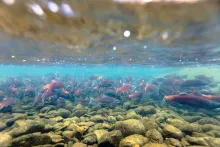
A school of red spawning kokanee salmon swimming underwater over a gravel lake bed

Every lake has a fish that tells its season, and at Eagle Nest Lake that fish is the kokanee salmon. Kokanee are landlocked sockeye salmon: they never travel to the ocean, and they live out their entire lives in fresh water. That makes this high lake, more than 2,200 acres when full, a natural home for them. The New Mexico Department of Wildlife notes that kokanee thrive in some of New Mexico's deeper and colder plankton-producing lakes, and our cold, high water in the Moreno Valley has made them, along with rainbow trout, one of the two fisheries this lake is primarily managed for.

  • Read more about The Salmon That Stay Home: Eagle Nest Lake's Kokanee and the Fall Spawn

The Way Station of Horrors: Charles Kennedy and the Palo Flechado Legend

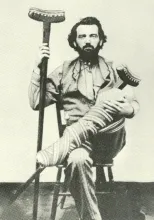
Historic black-and-white portrait of Colfax County rancher and gunfighter Clay Allison seated with crutches, circa 1880.

Did you know that the quiet road over Palo Flechado Pass, west of Eagle Nest on the way to Taos, once ran past a way station that travelers had good reason to fear? In the late 1860s, at the foot of the pass on the road between Elizabethtown and Taos, Charles Kennedy and his wife Gregoria kept a small travelers' rest, offering a meal and a bed in an isolated stretch of the Moreno Valley. Gold had been found near Baldy Mountain in 1866, and the road carried a steady stream of prospectors, merchants, and cowboys.

  • Read more about The Way Station of Horrors: Charles Kennedy and the Palo Flechado Legend

A Quiet Sunday in Eagle Nest: Small Village, Long Memory, and the Last Days of Lake Season

Sunday, November 1, 2026

This is a good Sunday to slow down in Eagle Nest. Daylight saving time ended at 2 a.m. this morning, so the village woke to standard time, a sunrise at 6:24 a.m., and a sunset coming early at 5:04 p.m. Rain is in the forecast through the day, with a high near 56 and a low near 35, and Monday turns colder still. It is the kind of quiet, wet late-fall day when the Moreno Valley shows its other side — not the busy summer lake town, but a small mountain community settling in for the season ahead.

  • Read more about A Quiet Sunday in Eagle Nest: Small Village, Long Memory, and the Last Days of Lake Season

Eight Dollars to Cimarron: The Stage Lines That Linked the Moreno Valley

View south from the Elizabethtown Cemetery over the former town site toward the Moreno Valley, New Mexico

Did you know that long before tour buses and ski traffic rolled through the Moreno Valley, the valley's lifeline was a stagecoach, and the fare was steep? In the gold-rush years, Elizabethtown, five miles north of today's Eagle Nest on State Road 38, was a booming mining camp far from any railroad. Mail, money, supplies, and newcomers all had to reach it the slow way, by horse-drawn coach over mountain roads, and two stage lines, a generation apart, kept the valley connected to the world outside.

  • Read more about Eight Dollars to Cimarron: The Stage Lines That Linked the Moreno Valley

The Minister in Cimarron Canyon: The Maxwell Grant and the Colfax County War

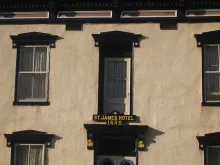
The facade of the St. James Hotel in Cimarron, New Mexico, where Francisco Griego confronted Clay Allison in 1875

Did you know that the quiet Moreno Valley, where Eagle Nest sits today, once lay inside the largest private land grant in United States history, and that a fight over who owned that land turned deadly in the canyon just west of town? The Maxwell Land Grant began in 1841, when Mexican governor Manuel Armijo granted some 1,714,765 acres in what is now Colfax County, New Mexico, and southern Colorado to Charles Beaubien and Guadalupe Miranda. Elizabethtown, Baldy Mountain, and the whole Moreno Valley were inside its boundaries.

  • Read more about The Minister in Cimarron Canyon: The Maxwell Grant and the Colfax County War

From Gold Pan to Cattle Herd: John Gallagher Built a Moreno Valley Ranch

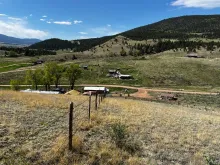
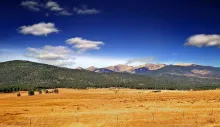
A fenced ranch pasture on the Moreno Valley floor near Eagle Nest, New Mexico, looking toward Wheeler Peak

Did you know some of the Moreno Valley's most lasting ranches began not with a cattle drive, but with a gold pan? In the years after the Elizabethtown boom, more than one miner who had come chasing gold looked out over the valley's broad grass and running creeks and decided the surer fortune was the land itself. Few made that turn more completely than John Gallagher, who traded placer claims for a homestead and became, in the words of a 1907 history of New Mexico, an extensive rancher of this country.

  • Read more about From Gold Pan to Cattle Herd: John Gallagher Built a Moreno Valley Ranch

From Meadow to Lake: How the Moreno Valley Floor Became Eagle Nest Lake

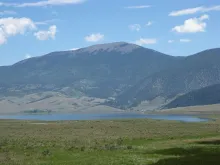
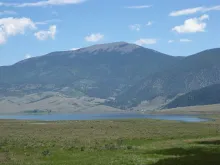
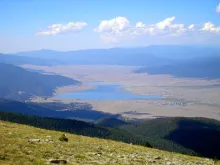
Eagle Nest Lake in the Moreno Valley, New Mexico

Stand on the shore at Eagle Nest Lake State Park on a calm morning and it is hard to imagine this water was ever anything else. Yet a little more than a century ago there was no lake here at all. In its place stretched the broad, high floor of the Moreno Valley, a glacial valley on the slopes of Wheeler Peak, where the Cimarron River wound through ranch and farm country beneath some of the tallest mountains in New Mexico.

  • Read more about From Meadow to Lake: How the Moreno Valley Floor Became Eagle Nest Lake

Eleanor: The Giant Dredge That Dug for Gold Below Elizabethtown

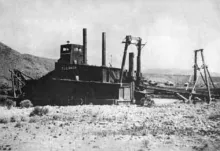
The gold dredge Eleanor on Moreno Creek near Elizabethtown, New Mexico, in the early twentieth century

By 1901, Elizabethtown had already lived one full boom-and-bust life. The gold rush that made E-Town, five miles north of today’s Eagle Nest, New Mexico’s first incorporated town back in the 1860s had faded, the county seat had moved away, and the town had settled into a quieter second act. Then the machine age arrived in the Moreno Valley with an idea as bold as any prospector’s pan: instead of sending men up Baldy Mountain for gold, why not send a floating factory to dig the gold out of the creek gravel itself?

  • Read more about Eleanor: The Giant Dredge That Dug for Gold Below Elizabethtown

Pagination

  • Previous page ‹‹
  • Page 3
  • Next page ››
Subscribe to Eagle Nest History

Eagle Nest, NM Weather

Loading current conditions...

Loading forecast...

Upcoming Events

🎉 Eagle Nest Events Calendar

Annual Favorites:
Fourth of July Parade, Barbecue, and Fireworks over the Lake
High Country Arts Festival — Late July, Enchanted Eagle Park
BalloonFest over Eagle Nest Lake
Fish Fest and Pike Round-Up — September, Eagle Nest Lake State Park

Article Archive

Browse past articles