Did you know some of the Moreno Valley's most lasting ranches began not with a cattle drive, but with a gold pan? In the years after the Elizabethtown boom, more than one miner who had come chasing gold looked out over the valley's broad grass and running creeks and decided the surer fortune was the land itself. Few made that turn more completely than John Gallagher, who traded placer claims for a homestead and became, in the words of a 1907 history of New Mexico, an extensive rancher of this country.
Click to see more photos of the Moreno Valley — historic views of Eagle Nest Lake, Elizabethtown, and the valley ranch country
Gallagher was born in Ireland in 1842 and came to the United States at about nineteen, first settling in Pennsylvania, where he worked in the coal mines. Drawn west, he stopped at Elizabethtown and made his home there permanently in 1868, right in the first rush of the mining excitement. Like his neighbors, he worked placer claims in Grouse and Willow gulches, and he kept at it for more than a decade, until 1881. The important part, the 1907 history notes, is that he was successful in his mining operations, and he put the capital he had won out of the gulches straight back into the valley.
With that mining money, Gallagher took up a homestead, purchasing 5,237 acres of land from the Maxwell Land Grant Company. On that ground he turned his attention to raising and herding cattle, following farming only to a limited extent beside it. He also bought other land in Union County, and he was extensively engaged in business as a rancher right up to the time of his death on May 25, 1905. He was not alone in the pattern. Patrick Dugan, another Irishman who reached Elizabethtown in March 1868 and worked placer claims with good success until 1878, sold out that year and bought a ranch of 3,300 acres from the same land grant company, entering a cattle business the history says he carried on with creditable success on the broad prairie range.
Gallagher had married Mary McGarvey in 1875, and the ranch he built became a family enterprise in the truest sense. When he died, the family also held ranches on the Chico River, and his eight children stepped into the work he had laid out: Patrick took charge of the ranch on the creek, John took charge of the Chico River ranch and the cattle on that place, and Charlie took charge of the home place. It is a tidy picture of how the valley changed in one generation, from a mining camp of strangers hunting a quick strike to settled ranching families dividing creeks and pastures among sons who had grown up on the land.
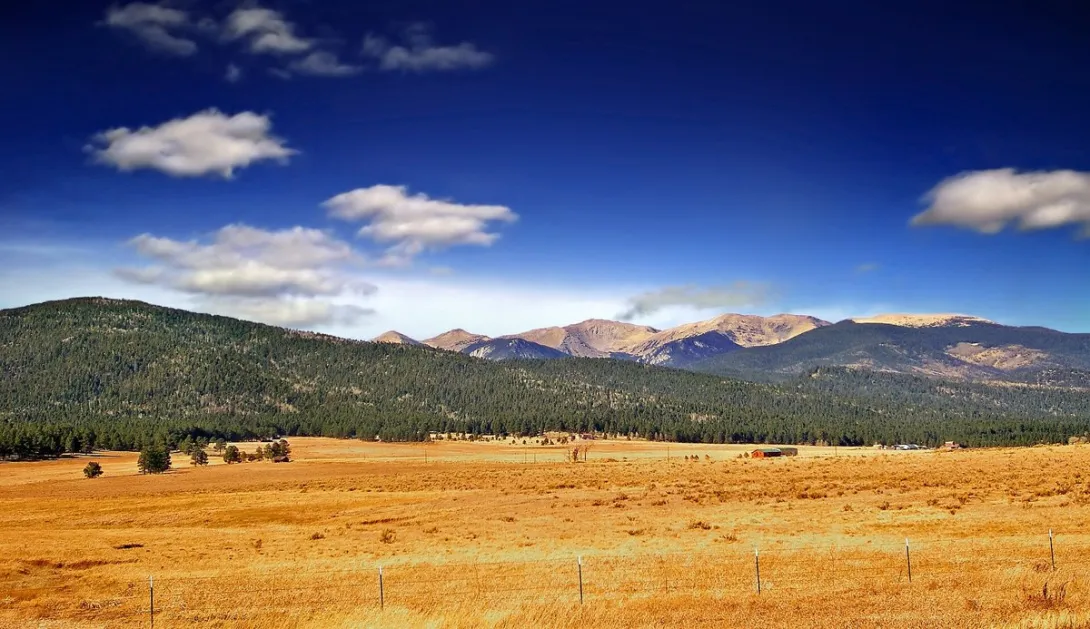
Next time you drive the valley floor between Eagle Nest and Elizabethtown, with Wheeler Peak standing over the pastures, that is the country Gallagher and Dugan chose when the gold gave out. The mines made the headlines, but it was cattle on grass like this that kept families here, fed the camps and the towns, and carried the Moreno Valley through the long quiet years after the boom. The gold pan started it. The herd is what lasted.