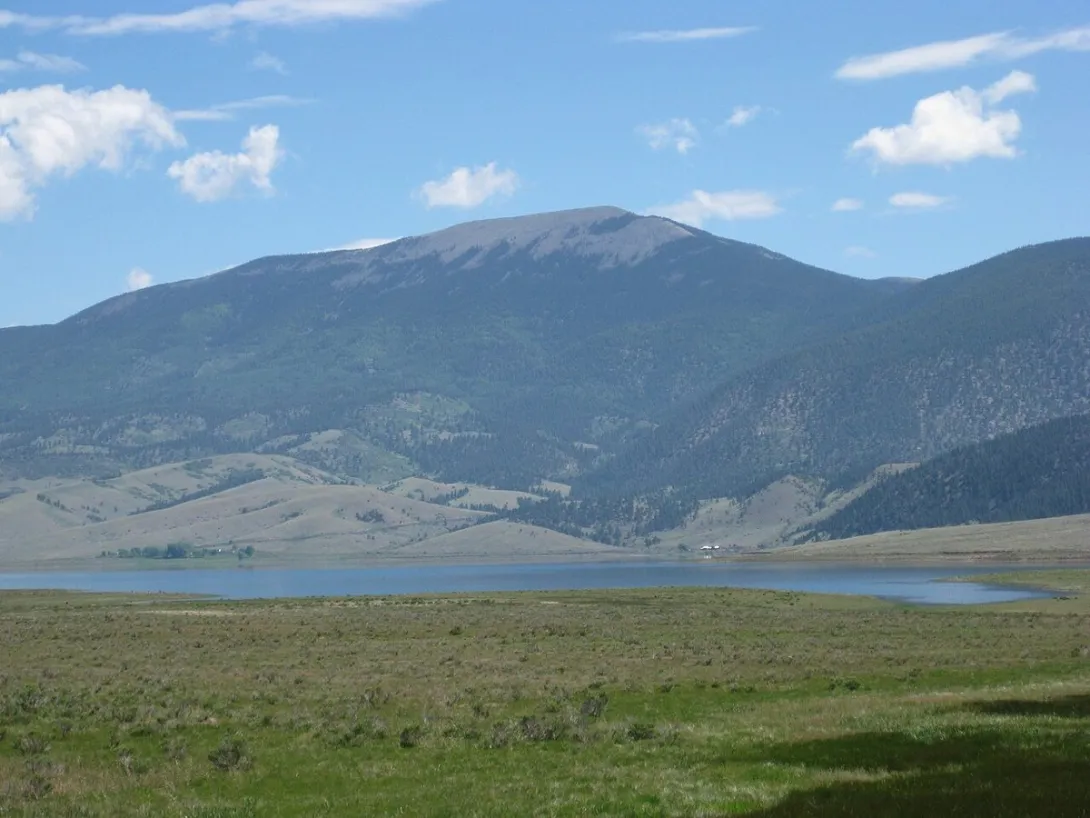
Stand on the shore at Eagle Nest Lake State Park on a calm morning and it is hard to imagine this water was ever anything else. Yet a little more than a century ago there was no lake here at all. In its place stretched the broad, high floor of the Moreno Valley, a glacial valley on the slopes of Wheeler Peak, where the Cimarron River wound through ranch and farm country beneath some of the tallest mountains in New Mexico.
That valley floor had already changed direction once, long before any dam. Geologists with the U.S. Geological Survey found that the Moreno Valley once drained south and east toward the Canadian River, until the Cimarron River captured its waters and diverted them east through what is now Cimarron Canyon. South of that capture, the drainage reversed for about fourteen miles, so the southern valley now flows north to meet the Cimarron — the same river that would one day fill the lake.
People left their own unfinished marks on the valley before the water rose. In 1907 the St. Louis, Rocky Mountain and Pacific Railway graded part of an extension from its terminus at Ute Park toward Taos, even boring a tunnel near the future dam site, but the line was never completed. That same year, Frank and Charles Springer received their permit to store Cimarron River water, and when Eagle Nest Dam closed across the canyon in 1918, the river began backing up across the valley floor it had carved.
The lake that formed measures about five miles long and two miles wide, covering roughly twenty-five hundred acres when full, with a surface more than eight thousand feet above sea level. Beneath that surface lies the old valley bottom: the river channel, meadow and pasture ground, and traces of the working landscape that came before, from ranch roads to the abandoned railroad grade. The water did not erase that earlier valley so much as preserve it, out of sight, under one of the highest lakes in the state.
Within a few years the change remade life above the surface too. Once the new lake was stocked with trout, fishermen began to arrive, and the quiet farming community beside it grew into a destination for anglers and travelers. That is the lake we welcome you to today — a working reservoir, a trout fishery, and, every winter, a sheet of ice — resting on a valley floor that remembers a river, a railroad that never arrived, and the meadows that came before the water.