Sunday, November 1, 2026
This is a good Sunday to slow down in Eagle Nest. Daylight saving time ended at 2 a.m. this morning, so the village woke to standard time, a sunrise at 6:24 a.m., and a sunset coming early at 5:04 p.m. Rain is in the forecast through the day, with a high near 56 and a low near 35, and Monday turns colder still. It is the kind of quiet, wet late-fall day when the Moreno Valley shows its other side — not the busy summer lake town, but a small mountain community settling in for the season ahead.
Eagle Nest has always been small. The 2020 census counted just 315 residents in a village at 8,216 feet, at the north end of Eagle Nest Lake where US 64 meets NM 38. Its Main Street runs less than a mile, lined with shops, lodges, and saloons. Yet the memory here is long. Long before there was a town, Ute and Jicarilla Apache people crossed this valley in search of game and golden eagle feathers for ceremonial use. When Elizabethtown, just five and a half miles north, boomed with gold, the Eagle Nest area stayed quieter, given over mainly to ranching and farming.
The lake changed everything. In 1873, brothers Charles and Frank Springer founded the C.S. Ranch on the banks of the Cimarron River. In 1907 the Springers were granted a permit to dam that river, and construction ran from 1916 to 1918. The finished Eagle Nest Dam stood 140 feet high and 400 feet across, the largest privately built dam in the United States at the time. The settlement that grew beside the new water was first known as Therma, and it was only renamed Eagle Nest in the 1930s, after the dam and lake that remade it into a resort town for fishermen and summer visitors escaping the heat below.
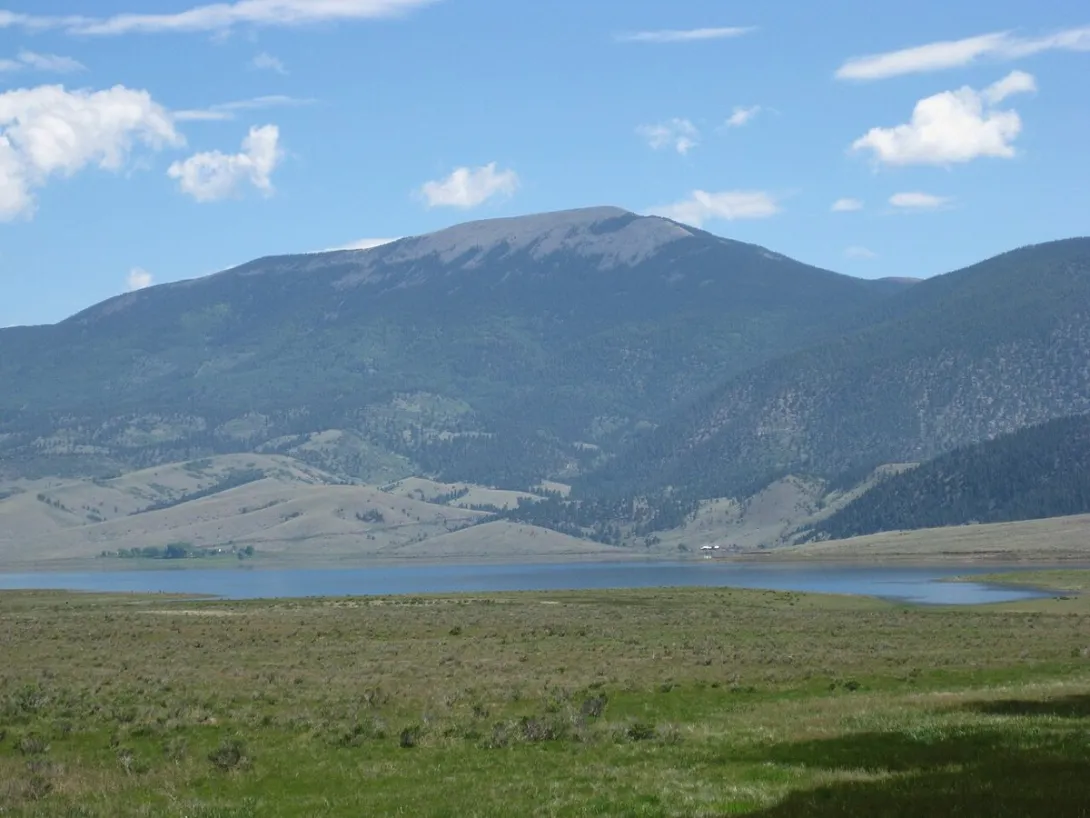
Today that water is Eagle Nest Lake State Park, just south of the village at 8,200 feet, with views toward Wheeler Peak, the highest point in New Mexico, and a reputation for kokanee salmon and rainbow trout. Day use runs from 6 a.m. to 9 p.m. If you are planning a visit in the next two weeks, plan it soon and plan it carefully: the Eagle Nest Campground closes on November 12 and reopens on April 1, and the Cieneguilla Day Use Area also closes on November 12, reopening in the spring of 2027. There are currently no courtesy docks, the main boat ramp is open to a single lane, and the North Ramp remains closed because of low water.
So use this Sunday well. Take the extra hour the clock gave back, watch the rain move across the valley, and, when the clouds lift, walk the lake shore while the campground season still has days left to run. Eagle Nest rewards visitors who come in the quiet weeks as much as those who come in July — you just have to dress for 8,200 feet, check the park alerts before you go, and leave yourself time to be back before that early 5:04 p.m. sunset.