Skip to header Skip to main navigation Skip to main content Skip to footer

Search form

Home
Eagle Nest New Mexico
Where the Mountains Meet the Lake

Main navigation

  • Home
  • Dining
  • Lodging
  • Shopping
  • Things to Do
  • Outdoors
  • History
  • Webcams
  • Business Directory

Gold Rush

Matthew Lynch: The Father of Hydraulic Mining in the Moreno Valley
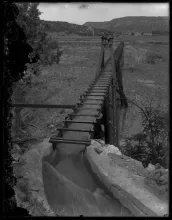
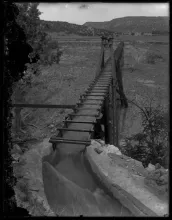
The elevated wooden flume that carried water toward the Elizabethtown gold workings, photographed in the 1910s.

Did you know that one of the men who found the Moreno Valley's richest gold lode also taught New Mexico how to mine with water? Matthew Lynch arrived in the Willow Creek diggings in the spring of 1867, when hundreds of prospectors were staking claims in every gulch around Baldy Mountain. Lynch and his partner Tim Foley took claims on the south side of the gulch, across from the first locations, and they soon played a part in the early history of the gold fields that few others could match.
  • Read more about Matthew Lynch: The Father of Hydraulic Mining in the Moreno Valley

The Peaceable Man Who Turned Hard: Wall Henderson of Elizabethtown

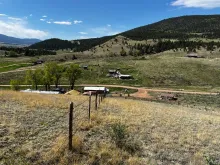
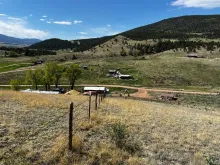
View over the former Elizabethtown townsite from its cemetery, looking across the Moreno Valley toward forested hills.

Did you know that one of Elizabethtown's earliest hard cases began, by every account, as a peaceable man? The gold camp that stood five miles north of today's Eagle Nest, on what is now New Mexico State Road 38, drew thousands of miners after gold was found in the Moreno Valley in 1866. The History of New Mexico, published in 1907, opens its account of those first years plainly: in the early days of the gold camp at Elizabethtown, crime was rampant, desperate characters flocked in from all quarters after the discovery of gold on the Maxwell ranch, and human life was held very cheap.

  • Read more about The Peaceable Man Who Turned Hard: Wall Henderson of Elizabethtown

First in New Mexico: The Gold Town That Became a County Seat

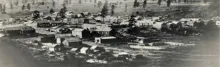
A black-and-white panoramic photograph of Elizabethtown, New Mexico in 1868, showing the new gold-rush town's buildings spread across the Moreno Valley.

Did you know the Moreno Valley gold rush began with copper, not gold? Early in 1866, Ute or Jicarilla Apache traders brought copper-bearing ore to the soldiers at Fort Union, east of the mountains. A soldier was shown where the ore had been found, high on Baldy Mountain, and staked a claim there. Known as the Mystic Lode, or simply the Copper Mine, it was the first mine in what became the Baldy Mining District, and it stood at more than 10,000 feet on a peak that rises to 12,441 feet above the valley.

  • Read more about First in New Mexico: The Gold Town That Became a County Seat

Eight Dollars to Cimarron: The Stage Lines That Linked the Moreno Valley

View south from the Elizabethtown Cemetery over the former town site toward the Moreno Valley, New Mexico

Did you know that long before tour buses and ski traffic rolled through the Moreno Valley, the valley's lifeline was a stagecoach, and the fare was steep? In the gold-rush years, Elizabethtown, five miles north of today's Eagle Nest on State Road 38, was a booming mining camp far from any railroad. Mail, money, supplies, and newcomers all had to reach it the slow way, by horse-drawn coach over mountain roads, and two stage lines, a generation apart, kept the valley connected to the world outside.

  • Read more about Eight Dollars to Cimarron: The Stage Lines That Linked the Moreno Valley

Gold in the Gravel: How Baldy Mountain Fed the Moreno Valley Placers

The wooden flume that carried water toward the Elizabethtown gold workings in the Moreno Valley.

Stand in Eagle Nest on a clear morning and look northeast, and one peak owns the skyline: Baldy Mountain, 12,441 feet high, the tallest summit in the Cimarron Range, rising about six miles from town with a bare, treeless crown. In October 1866, a party sent out to do development work on a copper prospect on that mountain found something else entirely — placer gold on Willow Creek, on Baldy's west slope. The news spread fast.

  • Read more about Gold in the Gravel: How Baldy Mountain Fed the Moreno Valley Placers

Eleanor: The Giant Dredge That Dug for Gold Below Elizabethtown

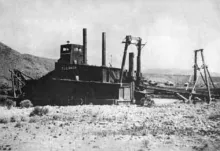
The gold dredge Eleanor on Moreno Creek near Elizabethtown, New Mexico, in the early twentieth century

By 1901, Elizabethtown had already lived one full boom-and-bust life. The gold rush that made E-Town, five miles north of today’s Eagle Nest, New Mexico’s first incorporated town back in the 1860s had faded, the county seat had moved away, and the town had settled into a quieter second act. Then the machine age arrived in the Moreno Valley with an idea as bold as any prospector’s pan: instead of sending men up Baldy Mountain for gold, why not send a floating factory to dig the gold out of the creek gravel itself?

  • Read more about Eleanor: The Giant Dredge That Dug for Gold Below Elizabethtown

Elizabeth Moore: The Little Girl a Town Was Named For

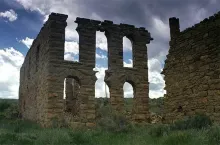
The stone ruins of the Mutz Hotel in Elizabethtown, the town named for Elizabeth Moore, via Ghost Town Gallery.

She was four years old when they named a town for her. When Elizabethtown was platted in 1868, Captain William H. Moore, who with his brother John had opened a general store below Baldy Mountain in June 1867, gave the new settlement the name of his little daughter, Elizabeth Catherine Moore. It is a charming origin for a mining town, and Elizabeth repaid it in an unexpected way: she never left.

  • Read more about Elizabeth Moore: The Little Girl a Town Was Named For

The Aztec's Second Boom: Baldy Town's Last Bright Year

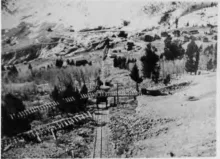
Baldy Town from the Aztec Mine, a 1925 United States Geological Survey photograph, public domain.

Mining towns are not supposed to get second acts, but Baldy Town did. The Aztec Mine, discovered in 1868 in the gulches between Ute Creek and South Ponil Creek, was the richest gold producer in the Baldy Mining District, the engine of Elizabethtown's first boom. By the 1890s, litigation and lean years had shut it down, and the town it fed was sliding toward ghosthood. The gold, everyone assumed, was gone.

  • Read more about The Aztec's Second Boom: Baldy Town's Last Bright Year

The Mutz Hotel: The Stone Ruin That Remembers Elizabethtown

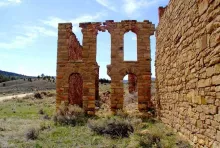
The stone ruins of the Mutz Hotel in Elizabethtown, New Mexico, photographed in 2004 by Dave Alexander.

Every ghost town has one building that carries its memory, and in Elizabethtown it is the Mutz Hotel. Or rather, what is left of it: a few low stone walls and tall window openings standing in the grass above NM 38, five miles north of Eagle Nest, photographed by nearly every traveler who stops. The ruin's story is the town's story in miniature: built on confidence, burned in a night, rebuilt in stone, and finally left to the wind.

  • Read more about The Mutz Hotel: The Stone Ruin That Remembers Elizabethtown

The Big Ditch: Forty Miles of Flume to Wash Gold

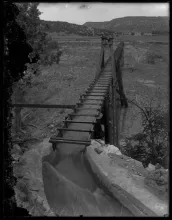
Historic photograph of the Big Ditch flume carrying water toward the Elizabethtown workings, Palace of the Governors Photo Archives.

Gold mining in the Moreno Valley had a water problem. The gravel in the gulches below Baldy Mountain was full of gold, but washing it out took water by the riverful, and the local creeks ran thin exactly when the miners needed them most. The solution, undertaken in 1868, was one of the boldest engineering gambles in New Mexico's mining era: the Big Ditch, a flume built to steal a river from the next watershed and deliver it to the diggings above Elizabethtown.

  • Read more about The Big Ditch: Forty Miles of Flume to Wash Gold

Pagination

  • Page 1
  • Next page ››
Subscribe to Gold Rush

Eagle Nest, NM Weather

Loading current conditions...

Loading forecast...

Upcoming Events

🎉 Eagle Nest Events Calendar

Annual Favorites:
Fourth of July Parade, Barbecue, and Fireworks over the Lake
High Country Arts Festival — Late July, Enchanted Eagle Park
BalloonFest over Eagle Nest Lake
Fish Fest and Pike Round-Up — September, Eagle Nest Lake State Park

Article Archive

Browse past articles