
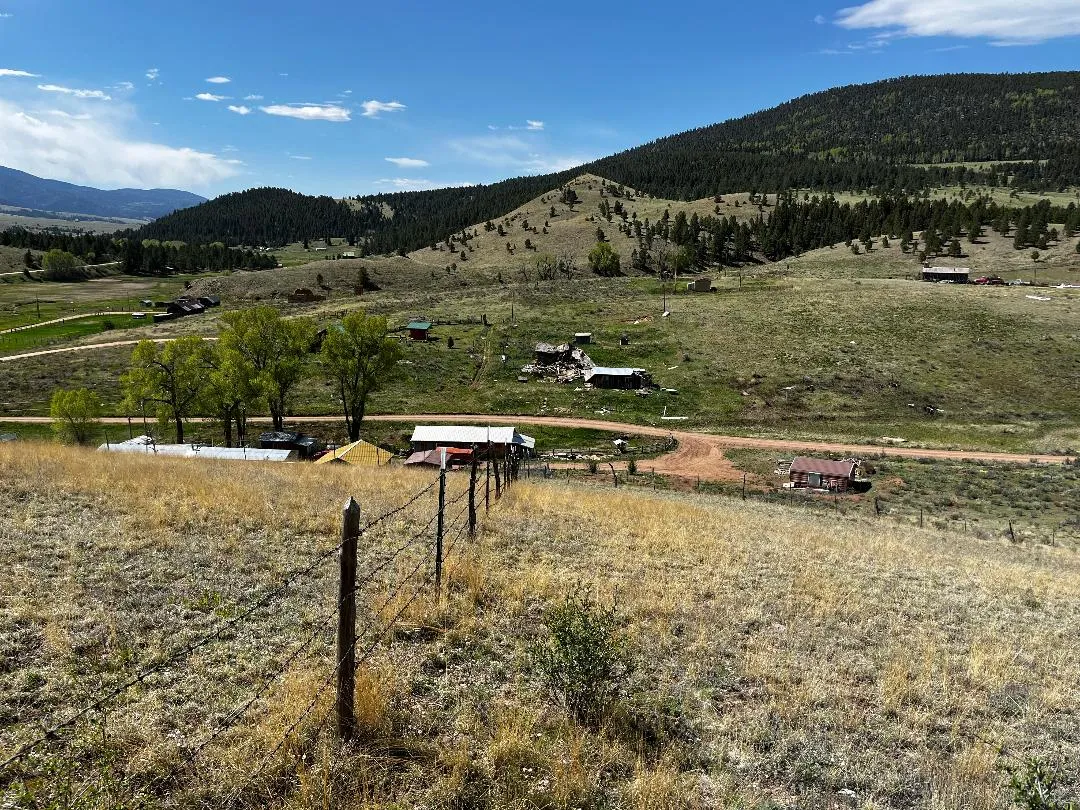
Did you know that one of Elizabethtown's earliest hard cases began, by every account, as a peaceable man? The gold camp that stood five miles north of today's Eagle Nest, on what is now New Mexico State Road 38, drew thousands of miners after gold was found in the Moreno Valley in 1866. The History of New Mexico, published in 1907, opens its account of those first years plainly: in the early days of the gold camp at Elizabethtown, crime was rampant, desperate characters flocked in from all quarters after the discovery of gold on the Maxwell ranch, and human life was held very cheap.
Click to see more photos of Elizabethtown
In 1869 a man commonly known as "Wall" Henderson, who up to that time had shown a most peaceable disposition, was working a claim a short distance down the creek. A number of bad men from Colorado, knowing that Henderson and some of his companions were working rich ground, began to jump their claims. One morning Henderson visited three or four of these men who were panning gold from one end of a claim he had staked out, informed them that they were trespassing, and warned them away. In a rage, one of the newcomers sprang at Henderson and struck at him with a shovel. He missed his mark, and before he could renew the attack Henderson shot and instantly killed him.
Henderson was soon afterward tried by a jury in Mora County and acquitted. Returning to Elizabethtown, he was subjected to great abuse from the friends of the man he had killed, until one day, while in a saloon, a man named "Ned" O'Hara attempted to strike Henderson in the head with a rock. Henderson drew his pistol and shot his assailant in the eye, but did not kill him. After that, the old history says, Henderson began to drink heavily, growing morose, and it required but a word to make him ugly.
A gang of desperate characters was making its headquarters on Ute Creek, and Henderson cast his lot with them. He visited Elizabethtown frequently, and usually engaged in a quarrel before leaving. One morning he took exception to some remark made to him by Joseph Stinson, proprietor of a saloon in which he was drinking, and emptied his revolver at him, killing him instantly. It was the second killing of Henderson's short and troubled record in the valley, and it fixed the reputation that followed him long after the gold camp faded.
The 1907 history closes Henderson's story with a verdict that may surprise modern readers. It says that Henderson has had a worse reputation since his death than his career warrants, and that the two men he killed were his only victims, in both instances, in the judgment of that era, under a course that was doubtless justifiable under the code of those days. Whether a reader agrees with that judgment or not, Henderson's slide from peaceable miner to Ute Creek hard case captures the Moreno Valley's roughest years in a single life. The townsite above Eagle Nest is quiet now, but the names from its saloons and creek claims still tell how quickly gold, grievance, and drink could turn a neighbor into a legend.