Mining towns are not supposed to get second acts, but Baldy Town did. The Aztec Mine, discovered in 1868 in the gulches between Ute Creek and South Ponil Creek, was the richest gold producer in the Baldy Mining District, the engine of Elizabethtown's first boom. By the 1890s, litigation and lean years had shut it down, and the town it fed was sliding toward ghosthood. The gold, everyone assumed, was gone.
Everyone was wrong. A geologist named Deshayes had drilled some 300 feet below the original Aztec workings and liked what the cores told him. In August 1914, a tunnel driven below the old mine broke into high-grade ore, rich rock the first generation of miners had passed directly over. The news moved through northern New Mexico the way gold news does, and Baldy Town woke up.
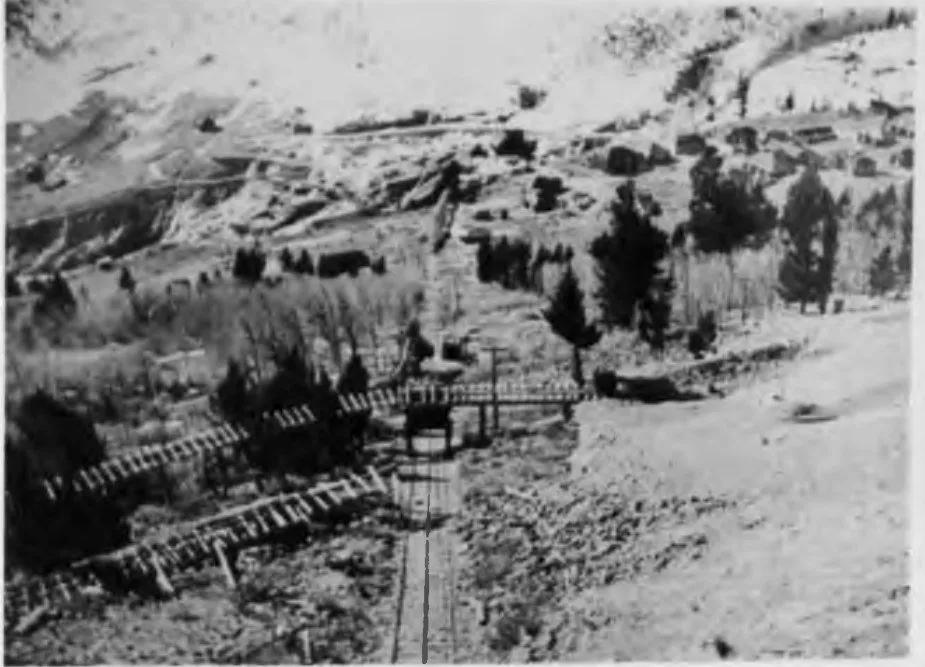
The revival was the real thing. Hundreds of miners poured into the gulches, and through 1915 and into early 1916 Baldy Town was one of the largest towns in the region, with the Aztec payroll at its center and Elizabethtown's old main street doing business again a few miles below. A United States Geological Survey photograph from 1925, looking down the tramway toward the town, still shows the scale of what was rebuilt on the mountain: mills, chutes, cabins, and the web of workings that the second boom inherited and extended.
It could not last, and it did not. The new ore body, for all its richness, was a pocket rather than a fortune. By late 1916 the high-grade rock had run out, and the hundreds who had come for it left as quickly as they had arrived. Baldy Town emptied for the last time, and the Aztec settled into the long quiet it has kept ever since.
There is no shame in that ending. The Aztec paid out twice, a generation apart, and its second boom proved something prospectors always believe and rarely get to demonstrate: that a worked-out mine sometimes is not. Above Eagle Nest, the old workings still wait in the gulches, keeping the mountain's last secret.