Skip to header Skip to main navigation Skip to main content Skip to footer

Search form

Home
Eagle Nest New Mexico
Where the Mountains Meet the Lake

Main navigation

  • Home
  • Dining
  • Lodging
  • Shopping
  • Things to Do
  • Outdoors
  • History
  • Webcams
  • Business Directory

Colfax County

The Peaceable Man Who Turned Hard: Wall Henderson of Elizabethtown
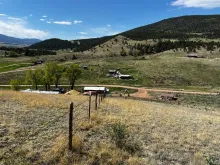
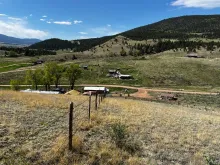
View over the former Elizabethtown townsite from its cemetery, looking across the Moreno Valley toward forested hills.

Did you know that one of Elizabethtown's earliest hard cases began, by every account, as a peaceable man? The gold camp that stood five miles north of today's Eagle Nest, on what is now New Mexico State Road 38, drew thousands of miners after gold was found in the Moreno Valley in 1866. The History of New Mexico, published in 1907, opens its account of those first years plainly: in the early days of the gold camp at Elizabethtown, crime was rampant, desperate characters flocked in from all quarters after the discovery of gold on the Maxwell ranch, and human life was held very cheap.
  • Read more about The Peaceable Man Who Turned Hard: Wall Henderson of Elizabethtown

The Railroad That Never Reached Eagle Nest: A Tunnel Above the Dam

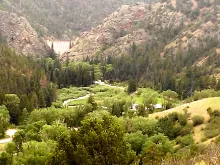
The Cimarron River winds through its forested canyon below Eagle Nest Dam, whose pale concrete face shows between the granite walls in the distance.

Did you know that no train has ever rolled into Eagle Nest? The Moreno Valley came tantalizingly close to a railroad in the first years of the 1900s, and the effort left a permanent mark on Cimarron Canyon: a tunnel cut through solid rock above the site of Eagle Nest Dam, bored for trains that never came. The story begins not in the valley, but in the coal country around Raton.

  • Read more about The Railroad That Never Reached Eagle Nest: A Tunnel Above the Dam

The Stone Mill That Fed an Empire: Maxwell's Aztec Mill at Cimarron

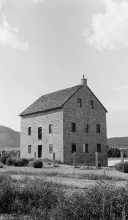
Black-and-white photograph from 1936 of the stone Aztec Mill in Cimarron, New Mexico, seen from the southeast.

Drive east from Eagle Nest through Cimarron Canyon, and at the far end of the canyon you reach Cimarron, the old headquarters of the Maxwell Land Grant. One stone building there still tells the story of how that empire fed itself. It is the Aztec Mill, built in 1864 by Lucien B. Maxwell, and the National Park Service once described it as a noted Santa Fe Trail landmark that looks today precisely as it did a century ago.

  • Read more about The Stone Mill That Fed an Empire: Maxwell's Aztec Mill at Cimarron

From Cattle Ranch to Angel Fire: How the LeBus Ranches Changed the South Valley

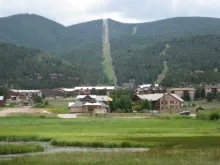
A grassy meadow and pond at Angel Fire, New Mexico, with resort buildings and forested ski slopes rising behind them.

When you stand at the south end of Eagle Nest Lake and look down the Moreno Valley, you are looking across ranch country. The creeks that wander through those pastures, including Cieneguilla Creek, are among the headwaters of the Cimarron River, and they feed the lake that the dam holds back at the valley's north end. Long after the dam was built, that southern valley floor was still working land, and one family from Texas would change it more than any other in the twentieth century.

  • Read more about From Cattle Ranch to Angel Fire: How the LeBus Ranches Changed the South Valley

Late Fall on Moreno Valley Forest Roads: Getting Ready Before Winter

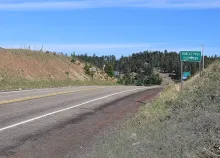
The Bobcat Pass summit sign on New Mexico State Road 38 in the Carson National Forest between Eagle Nest and Red River.

Early November is the in-between season for off-roading around Eagle Nest. The summer crowds are gone from the Moreno Valley, the aspens have dropped their leaves, and the high forest roads are still on the map, but the weather up there is no longer summer weather. This week, instead of pointing readers to one specific route, this Off-Road Friday is about getting ready: how to plan a late-fall drive on the designated forest roads around Eagle Nest so that the season ends with good memories and no rescue stories.

  • Read more about Late Fall on Moreno Valley Forest Roads: Getting Ready Before Winter

First in New Mexico: The Gold Town That Became a County Seat

A black-and-white panoramic photograph of Elizabethtown, New Mexico in 1868, showing the new gold-rush town's buildings spread across the Moreno Valley.

Did you know the Moreno Valley gold rush began with copper, not gold? Early in 1866, Ute or Jicarilla Apache traders brought copper-bearing ore to the soldiers at Fort Union, east of the mountains. A soldier was shown where the ore had been found, high on Baldy Mountain, and staked a claim there. Known as the Mystic Lode, or simply the Copper Mine, it was the first mine in what became the Baldy Mining District, and it stood at more than 10,000 feet on a peak that rises to 12,441 feet above the valley.

  • Read more about First in New Mexico: The Gold Town That Became a County Seat

White Ribbons in the Hills: Spotting Milky Quartz Around Eagle Nest

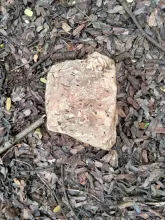
A chunk of milky quartz rests on leaf litter on the ground, showing its pale, cloudy surface.

Walk a hillside above Eagle Nest, look closely at the broken rock along a trail or road cut, and you may spot a pale ribbon running through darker stone. That white band is often milky quartz, one of the most common and most useful clues a beginner rockhound can learn to recognize in the Moreno Valley. It will not tell you that gold is nearby, and it is not rare, but learning to spot it trains your eye for how minerals moved through these mountains long ago.

  • Read more about White Ribbons in the Hills: Spotting Milky Quartz Around Eagle Nest

The Way Station of Horrors: Charles Kennedy and the Palo Flechado Legend

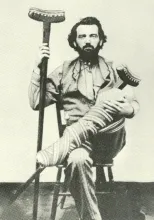
Historic black-and-white portrait of Colfax County rancher and gunfighter Clay Allison seated with crutches, circa 1880.

Did you know that the quiet road over Palo Flechado Pass, west of Eagle Nest on the way to Taos, once ran past a way station that travelers had good reason to fear? In the late 1860s, at the foot of the pass on the road between Elizabethtown and Taos, Charles Kennedy and his wife Gregoria kept a small travelers' rest, offering a meal and a bed in an isolated stretch of the Moreno Valley. Gold had been found near Baldy Mountain in 1866, and the road carried a steady stream of prospectors, merchants, and cowboys.

  • Read more about The Way Station of Horrors: Charles Kennedy and the Palo Flechado Legend

Eight Dollars to Cimarron: The Stage Lines That Linked the Moreno Valley

View south from the Elizabethtown Cemetery over the former town site toward the Moreno Valley, New Mexico

Did you know that long before tour buses and ski traffic rolled through the Moreno Valley, the valley's lifeline was a stagecoach, and the fare was steep? In the gold-rush years, Elizabethtown, five miles north of today's Eagle Nest on State Road 38, was a booming mining camp far from any railroad. Mail, money, supplies, and newcomers all had to reach it the slow way, by horse-drawn coach over mountain roads, and two stage lines, a generation apart, kept the valley connected to the world outside.

  • Read more about Eight Dollars to Cimarron: The Stage Lines That Linked the Moreno Valley

The Valle Vidal by Forest Road: A Designated-Road Drive from Eagle Nest

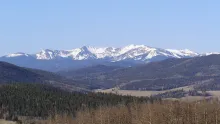
Snow-capped Wheeler Peak and Taos Mountain seen across the meadows and forests of the Valle Vidal.

For this Off-Road Friday, the ride from Eagle Nest is a drive, not a scramble: east on U.S. Highway 64 through Cimarron Canyon to Cimarron, then north a short way and left onto Forest Road 1950, the designated public road that crosses the Valle Vidal from east to west. The Valle Vidal, Spanish for Valley of Life, is a 101,794-acre mountain basin in the Carson National Forest northwest of Cimarron, in the Sangre de Cristo Mountains. It is some of the biggest, quietest country within a day trip of the Moreno Valley, and Forest Road 1950 is the way through it, on the road the whole way.

  • Read more about The Valle Vidal by Forest Road: A Designated-Road Drive from Eagle Nest

Pagination

  • Previous page ‹‹
  • Page 2
  • Next page ››
Subscribe to Colfax County

Eagle Nest, NM Weather

Loading current conditions...

Loading forecast...

Upcoming Events

🎉 Eagle Nest Events Calendar

Annual Favorites:
Fourth of July Parade, Barbecue, and Fireworks over the Lake
High Country Arts Festival — Late July, Enchanted Eagle Park
BalloonFest over Eagle Nest Lake
Fish Fest and Pike Round-Up — September, Eagle Nest Lake State Park

Article Archive

Browse past articles