Skip to header Skip to main navigation Skip to main content Skip to footer

Search form

Home
Eagle Nest New Mexico
Where the Mountains Meet the Lake

Main navigation

  • Home
  • Dining
  • Lodging
  • Shopping
  • Things to Do
  • Outdoors
  • History
  • Webcams
  • Business Directory

Eagle Nest Lake

A Quiet Sunday in Eagle Nest: Small Village, Long Memory, and the Last Days of Lake Season
Sunday, November 1, 2026

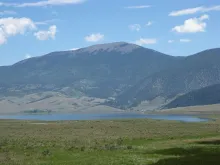
This is a good Sunday to slow down in Eagle Nest. Daylight saving time ended at 2 a.m. this morning, so the village woke to standard time, a sunrise at 6:24 a.m., and a sunset coming early at 5:04 p.m. Rain is in the forecast through the day, with a high near 56 and a low near 35, and Monday turns colder still. It is the kind of quiet, wet late-fall day when the Moreno Valley shows its other side — not the busy summer lake town, but a small mountain community settling in for the season ahead.
  • Read more about A Quiet Sunday in Eagle Nest: Small Village, Long Memory, and the Last Days of Lake Season

Wildlife and Wide Skies: A Late-Fall Saturday at Eagle Nest Lake

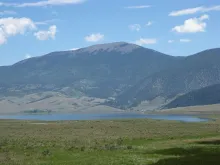
Eagle Nest Lake in the Moreno Valley, New Mexico

Saturday, October 31, 2026

Late fall is one of the quietest and most beautiful times to be at Eagle Nest Lake. The summer crowds are gone, the Moreno Valley has settled into gold and brown, and the high peaks around the lake, including Wheeler Peak, the highest point in New Mexico, stand over still, cold water. Eagle Nest Lake State Park sits at 8,200 feet on the Enchanted Circle Scenic Byway, and on a clear Saturday morning the whole glacial valley feels wide open, from the shoreline in the village to the mountain views at the far end of the lake.

  • Read more about Wildlife and Wide Skies: A Late-Fall Saturday at Eagle Nest Lake

From Fields to Faucets: How Eagle Nest Water Learned to Serve Towns

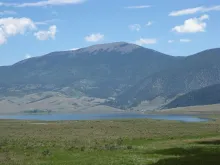
Another view of Eagle Nest Lake shoreline, New Mexico

When work began on Eagle Nest Dam in 1916, the water behind it had one main job: irrigation. Rancher and entrepreneur Charles Springer, working with engineer Neal Solvangen, built the dam on the Cimarron River to capture surplus flows that otherwise rushed past the Moreno Valley in spring. To help finance the project, Springer sold water rights from the new reservoir to local farmers, and those original deeded rights became known as the vested rights. The lake that filled behind the dam, at about 8,300 feet in elevation, can hold almost 70,000 acre-feet of water.

  • Read more about From Fields to Faucets: How Eagle Nest Water Learned to Serve Towns

Eagle Nest Weekend Preview: Halloween, Lake Time, and Sunday Rain on the Way

Eagle Nest Lake in the Moreno Valley, New Mexico

Friday, October 30, 2026

Halloween weekend arrives in Eagle Nest with crisp Moreno Valley air, a quiet lake, and a change in the weather saved for the end of the weekend. Friday and Saturday look like the days to be outside, while Sunday brings the best chance of rain of the three days, so plan the big outdoor stretch early and keep the slower, indoor plans for Sunday.

  • Read more about Eagle Nest Weekend Preview: Halloween, Lake Time, and Sunday Rain on the Way

Eagle Nest Lake Conditions: Fair Boating, Low Water, and Kokanee Season in Full Swing

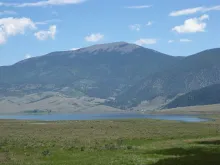
Eagle Nest Lake in the Moreno Valley, New Mexico

Thursday, October 29, 2026

It is a classic late-October morning in the Moreno Valley: clear and cold at first light, then warming under partly cloudy skies. Eagle Nest started the day in the low 30s, with a high near 61 degrees expected this afternoon and southwest winds reaching about 9 miles per hour. Sunrise was at 7:21 a.m. and sunset is at 6:07 p.m., and no weather alerts are in effect for the area. If you are heading to the lake, dress for winter at dawn and for a mild fall afternoon by lunchtime.

  • Read more about Eagle Nest Lake Conditions: Fair Boating, Low Water, and Kokanee Season in Full Swing

From Meadow to Lake: How the Moreno Valley Floor Became Eagle Nest Lake

Eagle Nest Lake in the Moreno Valley, New Mexico

Stand on the shore at Eagle Nest Lake State Park on a calm morning and it is hard to imagine this water was ever anything else. Yet a little more than a century ago there was no lake here at all. In its place stretched the broad, high floor of the Moreno Valley, a glacial valley on the slopes of Wheeler Peak, where the Cimarron River wound through ranch and farm country beneath some of the tallest mountains in New Mexico.

  • Read more about From Meadow to Lake: How the Moreno Valley Floor Became Eagle Nest Lake

Harvesting Winter: The Ice Cutters of Eagle Nest Lake

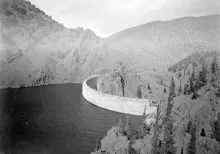
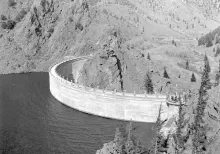
Historic Denver Public Library photograph of the Eagle Nest Dam arch and Eagle Nest Lake.

Eagle Nest Lake was built to work in the summer, storing irrigation water behind the great arch finished in 1920, when the dam was called the largest privately built dam in America. The lake stocked with fish and drew anglers all season. But for the families of the Moreno Valley, the lake's most important harvest came in the middle of winter, when the ice itself was the crop.

  • Read more about Harvesting Winter: The Ice Cutters of Eagle Nest Lake

The Vested Rights: The Water Promises Behind Eagle Nest Dam

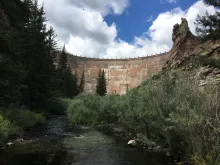
The downstream face of Eagle Nest Dam above the Cimarron River, photographed from the Village of Eagle Nest.

Eagle Nest Dam was built on a promise, and the promise was water. When Charles Springer set out to finance the dam on the Cimarron River, begun in 1916, he paid for it in part by selling water rights to the farmers of the valleys below. A farmer who bought in was buying a share of the river itself: spring runoff stored behind the arch, released through the dry months, delivered by right rather than by favor. Those sales were the financial engine of the whole project, and the buyers never forgot what they had paid for.

  • Read more about The Vested Rights: The Water Promises Behind Eagle Nest Dam

1920: The Year the Lake Arrived and a Town Began

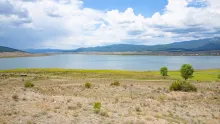
The shoreline of Eagle Nest Lake in the Moreno Valley, beside which the town was founded in 1920.

Most towns come first and acquire their landmarks later. Eagle Nest did it backwards: the landmark came first, and the town was established in 1920 to stand beside it. That was the year Eagle Nest Dam, after years of construction delayed by a world war and two killing winters, was finally completed in Cimarron Canyon. Behind the arch, the Cimarron River began spreading into a five-mile lake, and at the lake's north end a brand-new settlement took shape: Therma, the village that would become Eagle Nest.

  • Read more about 1920: The Year the Lake Arrived and a Town Began

Moving a River: The Building of Eagle Nest Dam

Historic photograph of the Eagle Nest Dam arch and Eagle Nest Lake, from the Denver Public Library collection.

Before Eagle Nest Dam could be built, the Cimarron River had to be moved. The dam site lay in a narrow gorge where the river ran exactly where the concrete needed to go, so the builders hung a flume from cables over the worksite and sent the river sailing overhead while men worked in the dry canyon below. It was an audacious start to one of the most ambitious private engineering projects in New Mexico history.

  • Read more about Moving a River: The Building of Eagle Nest Dam

Pagination

  • Previous page ‹‹
  • Page 3
  • Next page ››
Subscribe to Eagle Nest Lake

Eagle Nest, NM Weather

Loading current conditions...

Loading forecast...

Upcoming Events

🎉 Eagle Nest Events Calendar

Annual Favorites:
Fourth of July Parade, Barbecue, and Fireworks over the Lake
High Country Arts Festival — Late July, Enchanted Eagle Park
BalloonFest over Eagle Nest Lake
Fish Fest and Pike Round-Up — September, Eagle Nest Lake State Park

Article Archive

Browse past articles