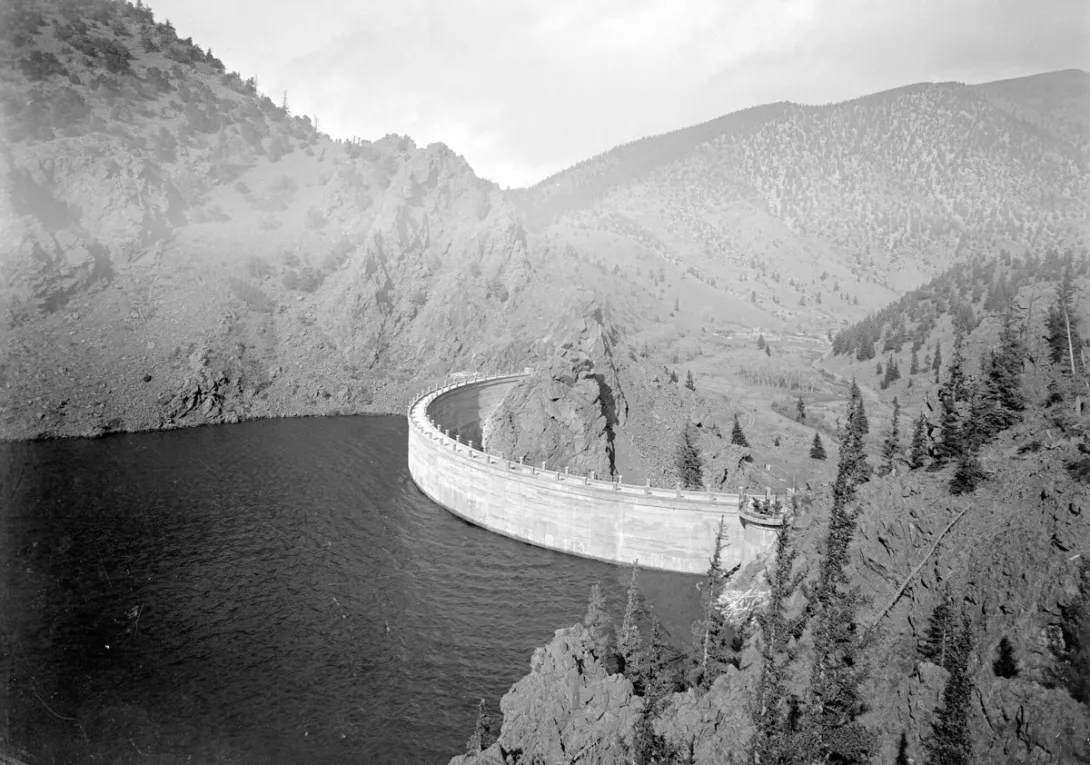
Eagle Nest Lake was built to work in the summer, storing irrigation water behind the great arch finished in 1920, when the dam was called the largest privately built dam in America. The lake stocked with fish and drew anglers all season. But for the families of the Moreno Valley, the lake's most important harvest came in the middle of winter, when the ice itself was the crop.
When the lake froze thick enough to bear horses and wagons, crews hired by T.D. Neal drove out onto the white surface and went to work. They scored the ice, sawed it into blocks, and hauled the harvest ashore to ice houses, where the blocks were packed in sawdust insulation. Ice stored that way kept deep into the warm months, cooling the valley's food and drink in the years before refrigeration reached the ranches. A frozen lake, properly harvested, was a cold-storage business spread over five miles of water.
The work mattered because of when it came. Winter was the dead season in the valley: the mines quiet, the fields frozen, farm work shrunk to chores. Jobs were scarce to the point of desperation, and many Moreno Valley families survived the cold months on the wages of ice cutting, supplemented by trapping in the canyons. The lake that the farmers' water money had created paid a second dividend to the same community, in January paydays.
It is a vanished world now. The refrigerator ended the ice harvest everywhere in America, and Eagle Nest was no exception. The ice houses are gone, the saws and tongs survive, if at all, as museum pieces, fittingly, in the keeping of the Enchanted Circle Gateway Museum, which preserves this chapter along with the rest.
But stand on the shore in January, with the lake locked white from dam to inlet and the wind coming off Wheeler Peak, and the scene is easy to repopulate: teams and sledges out on the glare, men sawing in the brief bright cold, harvesting winter itself to sell back to the summer.