Skip to header Skip to main navigation Skip to main content Skip to footer

Search form

Home
Eagle Nest New Mexico
Where the Mountains Meet the Lake

Main navigation

  • Home
  • Dining
  • Lodging
  • Shopping
  • Things to Do
  • Outdoors
  • History
  • Webcams
  • Business Directory

New Mexico History

The Vested Rights: The Water Promises Behind Eagle Nest Dam
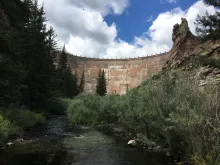
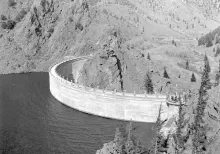
The downstream face of Eagle Nest Dam above the Cimarron River, photographed from the Village of Eagle Nest.

Eagle Nest Dam was built on a promise, and the promise was water. When Charles Springer set out to finance the dam on the Cimarron River, begun in 1916, he paid for it in part by selling water rights to the farmers of the valleys below. A farmer who bought in was buying a share of the river itself: spring runoff stored behind the arch, released through the dry months, delivered by right rather than by favor. Those sales were the financial engine of the whole project, and the buyers never forgot what they had paid for.
  • Read more about The Vested Rights: The Water Promises Behind Eagle Nest Dam

The Big Ditch: Forty Miles of Flume to Wash Gold

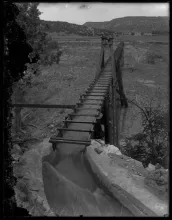
Historic photograph of the Big Ditch flume carrying water toward the Elizabethtown workings, Palace of the Governors Photo Archives.

Gold mining in the Moreno Valley had a water problem. The gravel in the gulches below Baldy Mountain was full of gold, but washing it out took water by the riverful, and the local creeks ran thin exactly when the miners needed them most. The solution, undertaken in 1868, was one of the boldest engineering gambles in New Mexico's mining era: the Big Ditch, a flume built to steal a river from the next watershed and deliver it to the diggings above Elizabethtown.

  • Read more about The Big Ditch: Forty Miles of Flume to Wash Gold

1920: The Year the Lake Arrived and a Town Began

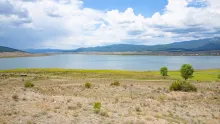
The shoreline of Eagle Nest Lake in the Moreno Valley, beside which the town was founded in 1920.

Most towns come first and acquire their landmarks later. Eagle Nest did it backwards: the landmark came first, and the town was established in 1920 to stand beside it. That was the year Eagle Nest Dam, after years of construction delayed by a world war and two killing winters, was finally completed in Cimarron Canyon. Behind the arch, the Cimarron River began spreading into a five-mile lake, and at the lake's north end a brand-new settlement took shape: Therma, the village that would become Eagle Nest.

  • Read more about 1920: The Year the Lake Arrived and a Town Began

A Museum Without Walls: The Gateway Museum's Walking Tour and Field Trips

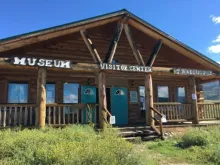
The Enchanted Circle Gateway Museum and visitor center on Therma Drive in Eagle Nest, New Mexico.

Most museums keep history behind glass. The Enchanted Circle Gateway Museum put a good share of its collection outdoors, on signposts, and let the village itself become the exhibit. The museum's volunteers designed and installed 44 Historic Walking Tour signs around Eagle Nest, turning an ordinary stroll down Therma Drive into a guided walk through the Moreno Valley's past.

  • Read more about A Museum Without Walls: The Gateway Museum's Walking Tour and Field Trips

The Enchanted Circle: The Loop That Put the Moreno Valley on the Map

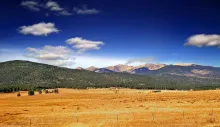
Wheeler Peak and the Moreno Valley seen from Eagle Nest, the country the Enchanted Circle Scenic Byway rings.

Some roads get you somewhere. The Enchanted Circle does something better: it brings you back to where you started, having shown you the best of northern New Mexico on the way around. The 84-mile loop, designated both a New Mexico Scenic Byway and a National Forest Scenic Byway, circles 13,161-foot Wheeler Peak, the tallest summit in the state, and links Taos, Questa, Red River, Eagle Nest, and Angel Fire into a single day's drive.

  • Read more about The Enchanted Circle: The Loop That Put the Moreno Valley on the Map

Laguna Vista Lodge: The 1898 Saloon That Still Anchors Therma Drive

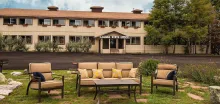
The Laguna Vista Lodge on Therma Drive in Eagle Nest, New Mexico, photographed from the lodge grounds.

On Therma Drive in Eagle Nest stands a building that has been pouring hospitality, in one form or another, since 1898. It was built as the El Monte Hotel in the village then called Therma, and local legend holds that it went up partly from stolen railroad ties, some of them still visible in certain rooms. True or not, the story suits a frontier hotel that has survived everything the Moreno Valley could throw at it.

  • Read more about Laguna Vista Lodge: The 1898 Saloon That Still Anchors Therma Drive

Frank Springer: The Lawyer Who Built a Dam and Collected Fossils

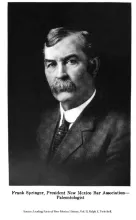
Archival portrait of Frank Springer, from Twitchell's Leading Facts of New Mexico History.

Few men left fingerprints on more of northern New Mexico's story than Frank Springer. Born in Wapello, Iowa, in 1848, he arrived in New Mexico in 1873 and settled at Cimarron, then the headquarters town of the vast Maxwell Land Grant. As the grant company's attorney, and later its president, Springer became the legal mind behind the largest privately owned estate in America, some 1.7 million acres that included the Moreno Valley and the slopes of Baldy Mountain.

  • Read more about Frank Springer: The Lawyer Who Built a Dam and Collected Fossils

Moving a River: The Building of Eagle Nest Dam

Historic photograph of the Eagle Nest Dam arch and Eagle Nest Lake, from the Denver Public Library collection.

Before Eagle Nest Dam could be built, the Cimarron River had to be moved. The dam site lay in a narrow gorge where the river ran exactly where the concrete needed to go, so the builders hung a flume from cables over the worksite and sent the river sailing overhead while men worked in the dry canyon below. It was an audacious start to one of the most ambitious private engineering projects in New Mexico history.

  • Read more about Moving a River: The Building of Eagle Nest Dam

Elizabethtown: The Gold-Rush Boomtown Above Eagle Nest

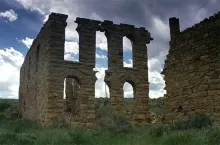
The stone ruins of the Mutz Hotel in Elizabethtown, New Mexico, all that remains of the gold-rush boomtown.

Five miles north of Eagle Nest, a few stone walls and a hillside cemetery are all that remain of the town that started everything in the Moreno Valley. Elizabethtown began in 1866, when gold was found in the gravel of Willow Creek on the slopes of Baldy Mountain. Word of the strike spread the way word of gold always does, and within months a tent city of miners was climbing the canyon.

  • Read more about Elizabethtown: The Gold-Rush Boomtown Above Eagle Nest

From Therma to Eagle Nest: How the Village Got Its Name

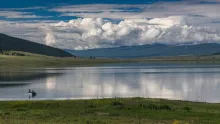
Eagle Nest Lake in the Moreno Valley, the water beside which the village of Eagle Nest grew up.

Every town has a first name, and Eagle Nest's was Therma. When the village was established at the north end of the new Eagle Nest Lake in 1920, it took its name from a Greek word meaning "hot" — an optimistic nod, perhaps, for a settlement sitting at 8,216 feet in the Moreno Valley, where winters are long and the wind off the lake can cut through a coat. The name Therma served the young community through its first decade and a half, while farmers, merchants, and lake visitors turned a wide spot on the Cimarron River into a village.

  • Read more about From Therma to Eagle Nest: How the Village Got Its Name

Pagination

  • Previous page ‹‹
  • Page 5
  • Next page ››
Subscribe to New Mexico History

Eagle Nest, NM Weather

Loading current conditions...

Loading forecast...

Upcoming Events

🎉 Eagle Nest Events Calendar

Annual Favorites:
Fourth of July Parade, Barbecue, and Fireworks over the Lake
High Country Arts Festival — Late July, Enchanted Eagle Park
BalloonFest over Eagle Nest Lake
Fish Fest and Pike Round-Up — September, Eagle Nest Lake State Park

Article Archive

Browse past articles