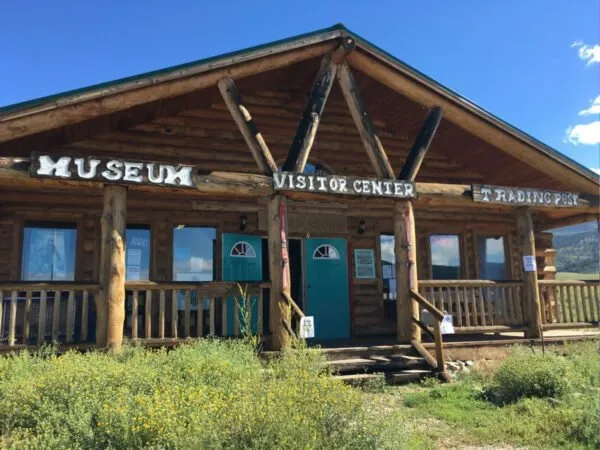
Most museums keep history behind glass. The Enchanted Circle Gateway Museum put a good share of its collection outdoors, on signposts, and let the village itself become the exhibit. The museum's volunteers designed and installed 44 Historic Walking Tour signs around Eagle Nest, turning an ordinary stroll down Therma Drive into a guided walk through the Moreno Valley's past.
The museum is run by the town's oldest continuously serving nonprofit, an organization that has carried local history for nearly a quarter of a century. From its home on Therma Drive, it does the expected work of a small museum: preserving photographs, documents, and artifacts from the mining camps, the ranches, and the lake years. But its signature move was to take the interpretation outside, placing the story at the spot where it happened, where a sign can point at the actual building, street, or shoreline a visitor is looking at.
The teaching extends well beyond the village limits. The museum leads about fifteen educational lecture field trips a year, open to the public and to local school groups, taking participants out into the valley to read its history in place: the dam, the ghost town, the old ditch lines and ranch country. It is licensed by the State of New Mexico to run the Water in the Southwest program and the Eagle Nest Dam Tour, the rare chance to go behind the gates of the 1920 arch with guides who can explain what the concrete means.
That combination, a small indoor collection, a 44-sign outdoor gallery, and a calendar of field trips, makes the Gateway Museum less a building than a system for keeping a community's memory in circulation. Schoolchildren who walk the tour grow up knowing why their town is named for eagles, why the lake is not natural, and why the ruins up the road matter.
History survives where somebody tends it. In Eagle Nest, the tending is done by volunteers, one sign, one field trip, and one school bus at a time.