Skip to header Skip to main navigation Skip to main content Skip to footer

Search form

Home
Eagle Nest New Mexico
Where the Mountains Meet the Lake

Main navigation

  • Home
  • Dining
  • Lodging
  • Shopping
  • Things to Do
  • Outdoors
  • History
  • Webcams
  • Business Directory

Ranching History

Thirty Years Before the Water Rose: The Long Wait for Eagle Nest Lake
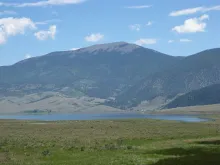
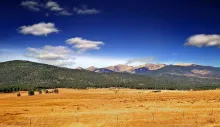
Eagle Nest Lake seen across the grassland of the Moreno Valley floor, with a forested mountain rising behind the water.

When you stand on the shore at Eagle Nest Lake State Park, the water looks as if it has always belonged here. The lake spreads about five miles long and two miles wide across the Moreno Valley floor, its surface sitting at 8,172 feet when full, beneath Wheeler Peak and Baldy Mountain. Yet this lake was imagined for thirty years before the water rose, and the valley floor it covers was working farmland whose owners did not give it up easily.
  • Read more about Thirty Years Before the Water Rose: The Long Wait for Eagle Nest Lake

A Thousand Acres in One Afternoon: How the CS Ranch Began in 1873

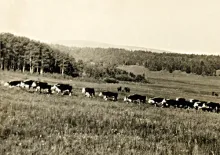
A historic black-and-white photograph of CS Ranch cattle grazing in a grassy pasture below forested hills near Cimarron.

Did you know that one of northern New Mexico's most enduring cattle ranches began with a single afternoon's decision? In February 1873, Frank Springer, a young man from Iowa who had come west the year before as a lawyer for the Maxwell Land Grant, rode north from Las Vegas to Cimarron on company business.

  • Read more about A Thousand Acres in One Afternoon: How the CS Ranch Began in 1873

From Cattle Ranch to Angel Fire: How the LeBus Ranches Changed the South Valley

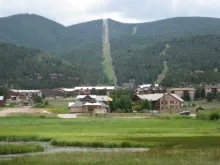
A grassy meadow and pond at Angel Fire, New Mexico, with resort buildings and forested ski slopes rising behind them.

When you stand at the south end of Eagle Nest Lake and look down the Moreno Valley, you are looking across ranch country. The creeks that wander through those pastures, including Cieneguilla Creek, are among the headwaters of the Cimarron River, and they feed the lake that the dam holds back at the valley's north end. Long after the dam was built, that southern valley floor was still working land, and one family from Texas would change it more than any other in the twentieth century.

  • Read more about From Cattle Ranch to Angel Fire: How the LeBus Ranches Changed the South Valley

A Herd That Netted 700 Dollars: How a Cattle Loss Built Idlewild

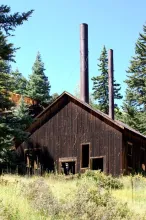
The Klondyke Mine mill near Eagle Nest in 2008, the mine beside which the Idlewild community developed in the 1930s.

Did you know that one of the Moreno Valley's most enduring little communities began with a cattle sale that went wrong? In 1929, Charles Gallagher shipped a herd of cattle to Kansas City as the stock market began to fall. He expected to receive 1,500 dollars for the herd, but he netted only 700 dollars, and market conditions forced him to sell some of his land. In this high valley between Eagle Nest and Angel Fire, that hard ranching arithmetic set a new community in motion.

  • Read more about A Herd That Netted 700 Dollars: How a Cattle Loss Built Idlewild

From Gold Pan to Cattle Herd: John Gallagher Built a Moreno Valley Ranch

A fenced ranch pasture on the Moreno Valley floor near Eagle Nest, New Mexico, looking toward Wheeler Peak

Did you know some of the Moreno Valley's most lasting ranches began not with a cattle drive, but with a gold pan? In the years after the Elizabethtown boom, more than one miner who had come chasing gold looked out over the valley's broad grass and running creeks and decided the surer fortune was the land itself. Few made that turn more completely than John Gallagher, who traded placer claims for a homestead and became, in the words of a 1907 history of New Mexico, an extensive rancher of this country.

  • Read more about From Gold Pan to Cattle Herd: John Gallagher Built a Moreno Valley Ranch

The Vested Rights: The Water Promises Behind Eagle Nest Dam

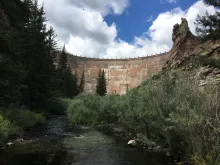
The downstream face of Eagle Nest Dam above the Cimarron River, photographed from the Village of Eagle Nest.

Eagle Nest Dam was built on a promise, and the promise was water. When Charles Springer set out to finance the dam on the Cimarron River, begun in 1916, he paid for it in part by selling water rights to the farmers of the valleys below. A farmer who bought in was buying a share of the river itself: spring runoff stored behind the arch, released through the dry months, delivered by right rather than by favor. Those sales were the financial engine of the whole project, and the buyers never forgot what they had paid for.

  • Read more about The Vested Rights: The Water Promises Behind Eagle Nest Dam

Frank Springer: The Lawyer Who Built a Dam and Collected Fossils

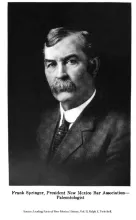
Archival portrait of Frank Springer, from Twitchell's Leading Facts of New Mexico History.

Few men left fingerprints on more of northern New Mexico's story than Frank Springer. Born in Wapello, Iowa, in 1848, he arrived in New Mexico in 1873 and settled at Cimarron, then the headquarters town of the vast Maxwell Land Grant. As the grant company's attorney, and later its president, Springer became the legal mind behind the largest privately owned estate in America, some 1.7 million acres that included the Moreno Valley and the slopes of Baldy Mountain.

  • Read more about Frank Springer: The Lawyer Who Built a Dam and Collected Fossils
Subscribe to Ranching History

Eagle Nest, NM Weather

Loading current conditions...

Loading forecast...

Upcoming Events

🎉 Eagle Nest Events Calendar

Annual Favorites:
Fourth of July Parade, Barbecue, and Fireworks over the Lake
High Country Arts Festival — Late July, Enchanted Eagle Park
BalloonFest over Eagle Nest Lake
Fish Fest and Pike Round-Up — September, Eagle Nest Lake State Park

Article Archive

Browse past articles