Some landmarks you visit behind a rope. Eagle Nest Dam is not one of them. More than a century after Taos Pueblo laborers raised its concrete arch in Cimarron Canyon, the dam is still on duty every day, holding back the Cimarron River to form Eagle Nest Lake and releasing water for the farms and ranches it was built to serve. Frank and Charles Springer and the Cimarron Valley Land Company received Permit No. 71 in 1907, and construction ran from 1916 to 1918. The finished arch stands 140 feet high and 400 feet long, just 9.5 feet thick at the crest and 45.2 feet thick at the base, built of some 26,000 cubic yards of cyclopean concrete. In its day it was considered the largest privately built dam in the United States.
Click to see more photos of Eagle Nest Lake State Park
That working life is exactly what preservationists honored a generation later. The dam was listed in the New Mexico State Register of Cultural Properties on January 20, 1978, and added to the National Register of Historic Places on April 18, 1979. Its National Register nomination called it one of the oldest functioning arch-type dams in New Mexico, significant for agriculture, conservation, engineering, and architecture. The key word is functioning. This is not a ruin that hints at a vanished purpose. It is a historic structure still performing the purpose its builders intended.
Follow the water and the story continues downstream. The reservoir holds 79,120 acre-feet behind the dam, spreading into a lake about five miles long and two miles wide whose surface sits at 8,172 feet when full. Released water still travels the Cimarron River and a complex canal system to farmers and ranchers, some as far as fifty miles downstream. Over time, some of the original vested rights the Springers sold to help finance the dam have been purchased by municipalities, including Raton and Springer, and the villages of Angel Fire, Eagle Nest, and Cimarron can also draw on the lake. Irrigation water and drinking water now flow from the same historic source.
The lake gained a new caretaker without losing its old job. In 2002 the State of New Mexico bought the lake, which is now operated by the New Mexico Interstate Stream Commission, while the original owners kept their water rights. After years of litigation, Governor Bill Richardson and local governing bodies signed the Eagle Nest Water Rights Settlement on June 2, 2006. The settlement provides that all users share in shortages, prorated by the amount of water in the lake on June 1 of each year. The state also established Eagle Nest Lake State Park, formally opened on July 3, 2004, setting aside 3,488 acres around the 2,400-acre lake for public recreation.
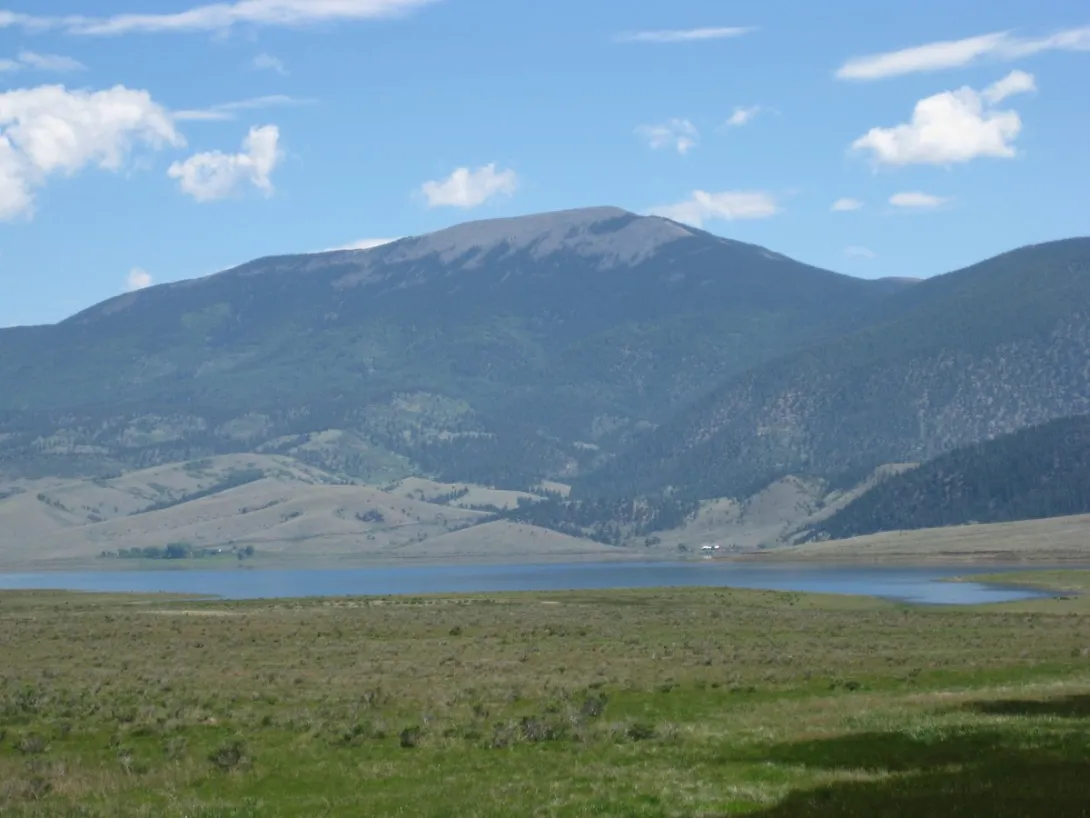
That is where living history meets our visitors today. At the park, at about 8,200 feet in the Moreno Valley, a green visitor center offers exhibits, a classroom, and an expansive patio overlooking the water, so the story of the dam is told in sight of the lake it created. The eagles that made their home on the sides of the dam and gave it its name still define the place, and bald and golden eagles grow more numerous here in December and January. Come stand on our shore, look across at Wheeler Peak, and you are not looking at the past preserved under glass. You are looking at it still at work.