If you are out on the roads around Eagle Nest at first light or in the last hour of the evening, watch the meadow edges. Mule deer are among the most familiar large mammals in the Moreno Valley, stepping out of the timber to feed where grass, sagebrush, and shrubs meet. The New Mexico Department of Game and Fish calls the mule deer perhaps the most widely distributed and best known large mammal in the state, and the deer here belong to the Rocky Mountain subspecies that inhabits the northern half of New Mexico.
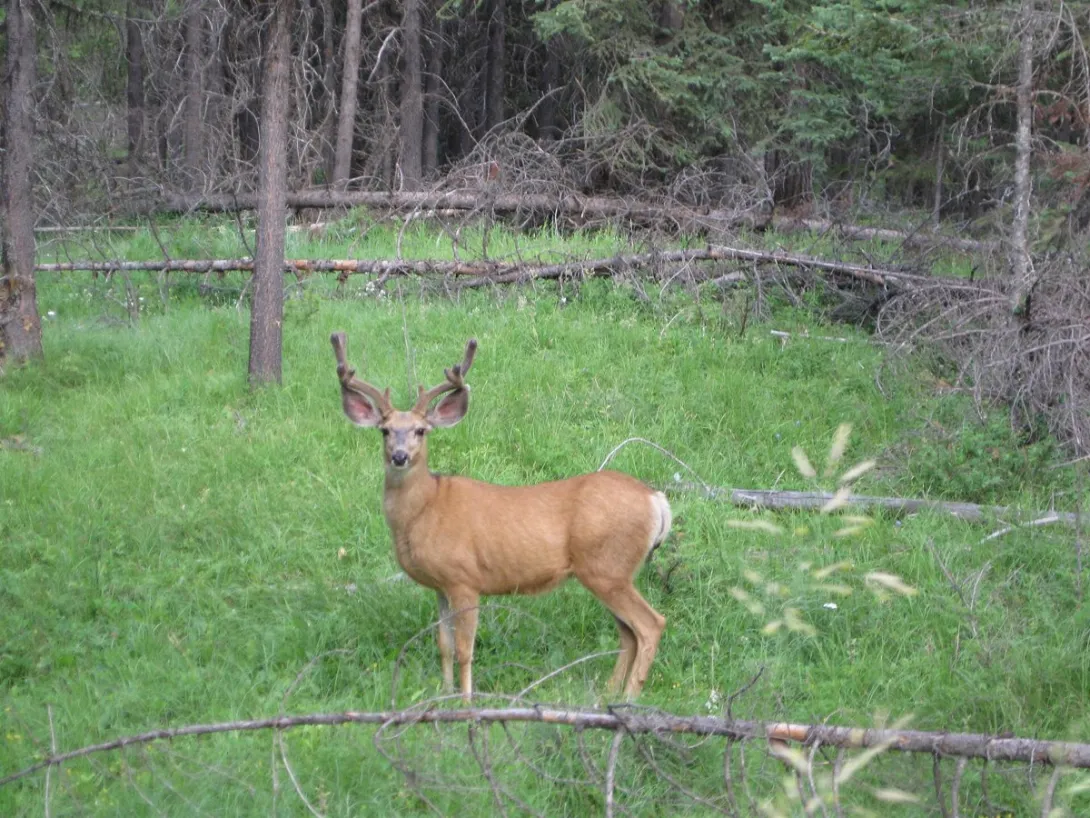
They are easy to know once you look for the right signs. The name comes from the large ears, which resemble those of a mule and turn constantly toward every sound. Look also for the white rump and the small, rope-like tail with a black tip, and, on the bucks, antlers that fork as they grow, with points branching off two main beams. Their coats change with the seasons, reddish in summer and gray in winter, so the deer you see this month wear the heavier gray coat of the cold season.
Mule deer are browsers. According to the Department of Game and Fish, they feed primarily on the leaves, stems, and buds of woody plants, with forbs, the broad-leaved herbaceous plants of the meadows, also a significant part of their diet. They bring keen eyesight and hearing and an exceptional sense of smell to that quiet work, and they are most active in the early morning and late evening, bedding down in cover during the day. When one is startled, it may leave in the stiff-legged, bouncing gait called stotting, with all four feet leaving the ground together, a way of moving that carries it surely through brush and rough ground.
November finds the valley deer feeding steadily as the nights turn cold and the first lasting snows whiten the high country around the valley. It is a season to drive with extra care at dawn and dusk, when deer move between bedding cover and feeding ground and may cross the road without warning. A slow drive past open meadows and timber edges near Eagle Nest, binoculars in hand, is the classic way to watch them, and a deer that lifts its head, stares, and holds still is one that has already seen you.
Know before you go
Watch from a respectful distance, at least 25 yards away, and use binoculars or a zoom lens rather than walking closer. If a deer reacts to you or moves away, you are too close. Never feed wildlife, because human food harms deer and teaches them to approach people and roads. Stay on roads and trails, and give bucks extra room in the fall, when they are focused on the breeding season and less tolerant of approach. Exact locations of sensitive wildlife are intentionally not shared in this feature. Slow down on valley roads at dawn and dusk, especially where meadow meets timber.