The Moreno Valley has a short memory problem. Gold camps that once held thousands of people have dwindled to a few stone walls, a lake covers pasture where ranch families once cut hay, and whole chapters of the valley's story survive only in photographs, letters, and the memories of old-timers. Keeping that story alive is the work of two small museums, one in Eagle Nest and one in the ghost town up the road.
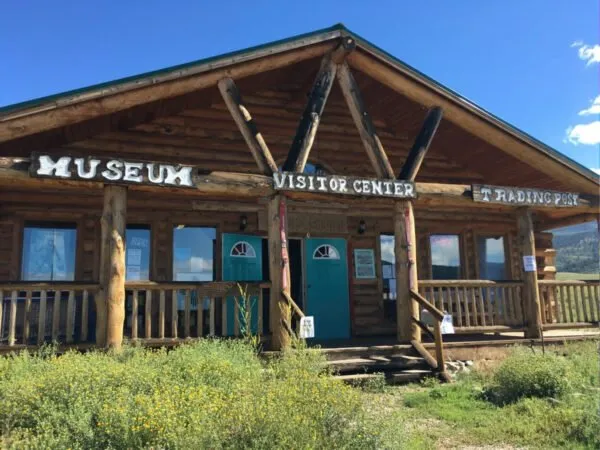
The Enchanted Circle Gateway Museum, on Therma Drive in Eagle Nest, gathers the valley's past under one roof. Its photographs, documents, and artifacts trace the Moreno Valley from the mining camps of the 1860s through the ranching years and into the era of the lake. For a village that began as a wide spot beside a brand-new reservoir, the museum is both an archive and a front porch, the place where visitors get their first bearings and locals bring the pieces of family history they want preserved.
The museum's work does not stay indoors. Local historians, among them Jack Schweitzer, have led rare walks behind the locked gates of Eagle Nest Dam, taking small groups where the public almost never goes: across the crest and into the story of the great concrete arch that holds back the Cimarron River. Standing on a structure finished in 1920, hearing how farmers and ranchers financed it and how crews built it through wartime shortages and bitter winters, turns an engineering landmark into a human one.
Five miles north, the Elizabethtown Museum keeps a different kind of vigil. It occupies an original 1860s building in a town that began with the 1866 gold strike on Willow Creek and became New Mexico's first incorporated town. Elizabethtown boomed, burned, and faded, but its museum holds the line against forgetting, preserving the everyday evidence of the miners, merchants, and families who made the valley's first city.
Together, the two museums bookend the Moreno Valley's history: one in a living village beside the lake, one in a quiet ghost town beneath Baldy Mountain. Both run on the conviction that a place which forgets its past loses something it cannot buy back. In Eagle Nest, thanks to the volunteers and historians who staff them, the valley's story is still being told.