Before there was a town here, there was a reason to come. A New Mexico Historic Preservation Division marker, recorded by the Historical Marker Database, tells the older story of the ground where Eagle Nest now stands: members of several tribes traveled to this high valley to collect ceremonial feathers. The Moreno Valley, long before fences or highways, was a gathering place, valued across cultures for what the eagles provided.
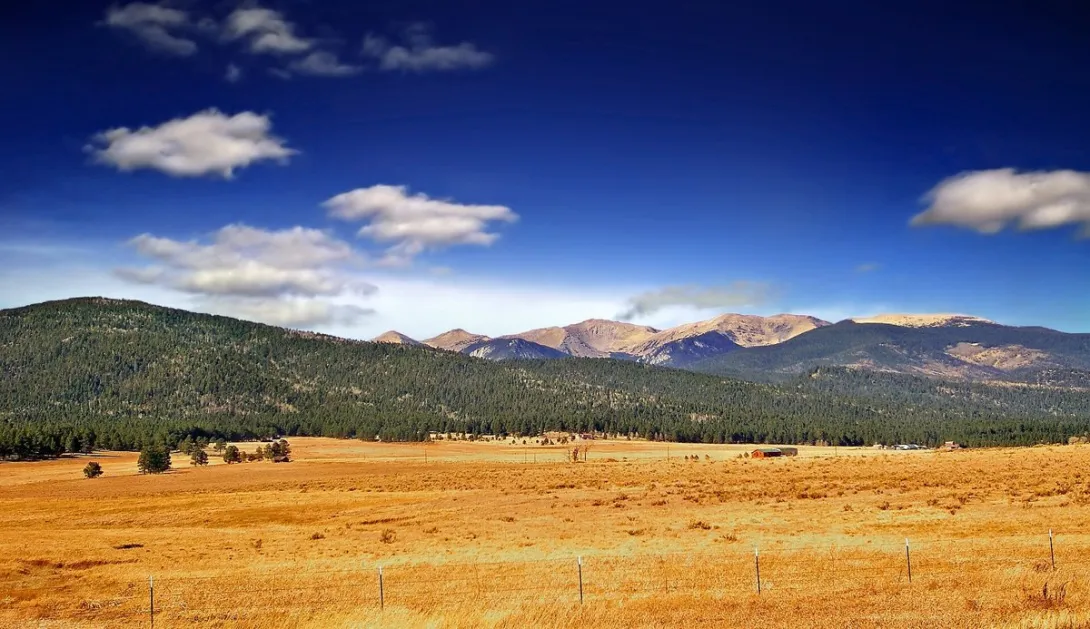
The Ute and Jicarilla Apache roamed this country for game and for golden feathers used in ceremonial worship. At 8,216 feet, ringed by the Cimarron Range and the Sangre de Cristo Mountains, the valley offered elk and deer, summer grass, and eagles riding the thermals over the ridges. It was used the way such places were used for centuries: seasonally, purposefully, and by peoples who knew exactly where they were.
The valley's written history tends to start five miles north, with the 1866 gold strike that raised Elizabethtown, but that is a trick of paperwork. While E-Town boomed with stamps and saloons, the ground at the valley's north end, today's Eagle Nest, remained what it had long been: ranch and farm country, quiet pasture under the same eagles. The feathers were still being gathered within living memory of the men who filed the mining claims.
Settlement, when it came in 1920, named the place Therma, a Greek word that owed nothing to the valley. The correction arrived in 1935, when the village took the name Eagle Nest, for the golden eagles of the surrounding mountains. Whether the founders knew it or not, the new name reached back past the dam, past the gold rush, to the oldest reason anyone ever came to this valley: the eagles, and the feathers that fell from the sky.
It is a good name, and an honest one. Drive through on a summer morning and you will likely see its justification circling over the lake, exactly where it has always been.