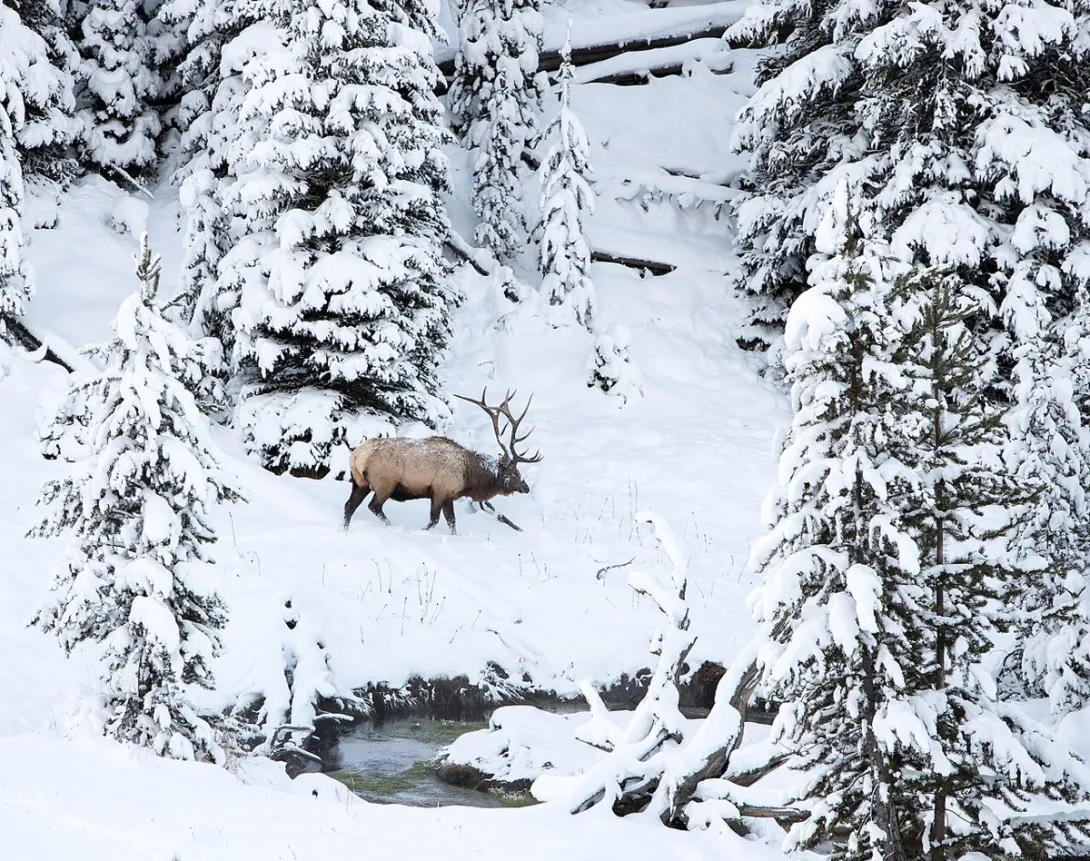
Early November brings a quiet change to the Moreno Valley. The aspens have mostly turned, the mornings around Eagle Nest Lake start cold, and elk become one of the great sights of the season. The lake sits at about 8,200 feet in a glacial valley on the Enchanted Circle, and state park and state water officials both describe the area around it as ideal for wildlife viewing, with elk among the animals that inhabit the valley alongside mule deer, bear, eagles and turkeys.
Click to see more photos of elk
Much of the country east of town is made for elk. Cimarron Canyon State Park, just east of Eagle Nest Lake along U.S. Highway 64, lies within the Colin Neblett Wildlife Area, some 33,116 acres of the Cimarron Range administered by the New Mexico Department of Game and Fish. The wildlife area is bordered by Eagle Nest Lake on the west, and its forests, meadows and river corridor are listed as home to elk, deer, bear and many other species. West and south of town, the open grasslands of the Moreno Valley give herds room to graze within sight of Wheeler Peak and Baldy Mountain.
Elk are primarily grazers, and wildlife managers note they are often found in open grasslands and meadows near the edge of the forest. In mountain country they tend to stay at higher elevations during the warmer months and move to lower elevations in winter. By early November the fall rut, when bulls bugle and gather cows in September and into October, is winding down. Herds settle into a quieter rhythm, feeding in the open at first and last light and resting in timber during the middle of the day, which makes dawn and dusk the most rewarding times to look for them.
For visitors, the pleasure is in watching from a distance rather than getting close. Scan the valley meadows and the lake margins from the road and from public pullouts, and look along the forest edge where grass meets trees. Binoculars or a spotting scope turn a distant herd into a real show: cows and calves feeding together, a bull with a full rack of antlers standing watch, and breath hanging in the cold morning air. A herd moving unhurried across a frosty meadow, with the high peaks behind it, is the Moreno Valley at its best.
Know before you go
Watch elk ethically and give them plenty of room. Forest Service guidance is to keep at least 25 yards away from large animals such as elk and deer, and at least 100 yards away from bears. Never feed wildlife, since human food harms animals and teaches them to approach people and roads. Stay on roads and established trails, use binoculars or a zoom lens instead of walking closer, and back away slowly if an animal stops feeding, stares at you or moves off because of your presence. Sensitive exact locations for wildlife are intentionally not shared here, so please enjoy general viewing areas and let the herds go about their winter routines undisturbed.