Did you know that, for more than a century, some of the best Moreno Valley history was never written down at all? It lived in kitchen-table stories told by ranching and mining families around Eagle Nest and Angel Fire. Until the 1990s, little had been written about the history of northern New Mexico's Moreno Valley, and local business people saw the risk plainly: when the old-timers were gone, their memories would go with them. So they called upon local writers to research and document the fascinating history of the valley and the towns that still exist here today, before those voices were lost.
Click to see more photos of the Moreno Valley — Eagle Nest Lake, Elizabethtown, and the valley towns
Members of the Moreno Valley Writers Guild became the original researchers and writers of that rescue effort. They sat down with members of the pioneer families who had come West with nothing much more than grit and determination, and the resulting oral history grew well beyond family recollections. It came to encompass the work of historians, and it was produced with the blessing of the History Department at the University of New Mexico. In his foreword, Carlos Vasquez of the university praised the project, writing that it was an honor to play even a minor role in introducing these hardy souls to the work of incorporating oral testimony into historical research.
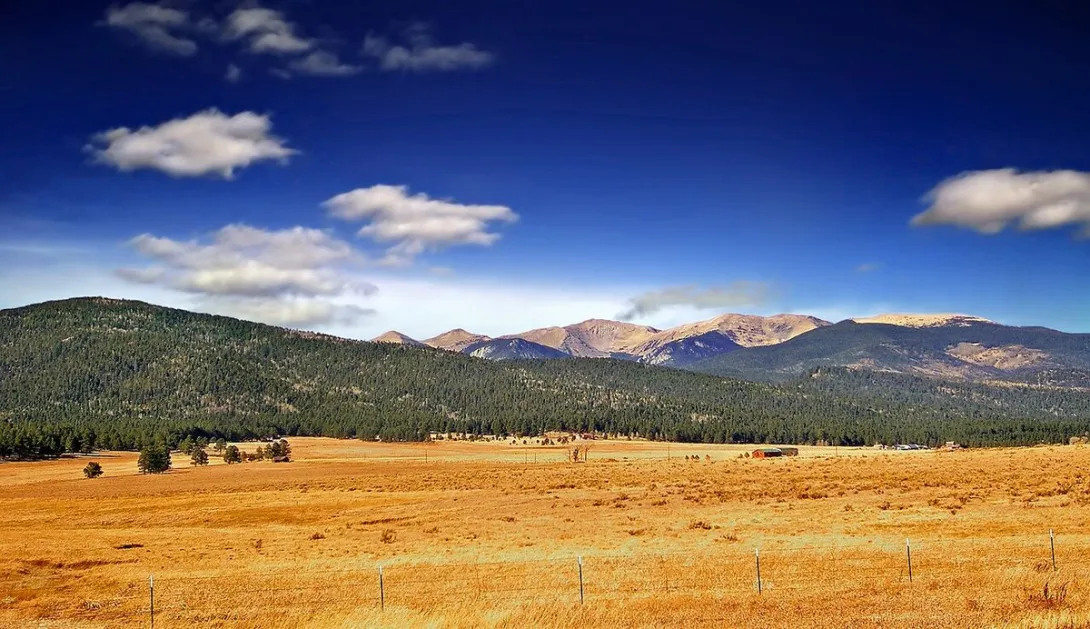
The valley they set out to save on paper is small in size and enormous in story. The book describes the Moreno Valley as a nineteen-mile strip of land nestled among the Sangre de Cristo Mountains, about twenty miles east of Taos, taking its name from the Moreno River, a name meaning dark, which flows into Eagle Nest Lake. Before the valley became part of the vast Beaubien-Miranda Land Grant, later the Maxwell Land Grant of more than 1.7 million acres, it was the summer hunting grounds of Apache and Ute tribes. Later it became the scene of a gold rush, the center of the Colfax County War, a passageway to the Santa Fe Trail, and a regular route of frontiersman Kit Carson. At one time, the book notes, the population of this obscure place was larger than that of Santa Fe, and the now-quiet town of Elizabethtown was proposed to become the state capital.
The people who made the book are part of its story, too. The late Jack C. Urban served as editor and compiler of the material for the first edition, published in 1997. Connie Shelton, the bestselling author of more than thirty-five mystery novels, was president of the Moreno Valley Writers Guild during the years when the book was originally being written and published. For the revised third edition, she completely reviewed and newly edited the work, with new material added, so that the collection did not simply reprint the past but grew with it.
That is why this book belongs to living history, not just to the shelf. Every generation in the Moreno Valley has had to decide whether the valley's stories are worth keeping, and in the 1990s a group of neighbors answered by listening, writing, and publishing. Now in its third revised and expanded edition, Lure, Lore, and Legends of the Moreno Valley still invites visitors to look at Eagle Nest Lake, Elizabethtown, and the ranch country in between with different eyes, because behind every quiet pasture and stone ruin is a story that somebody in this valley took the trouble to save.